
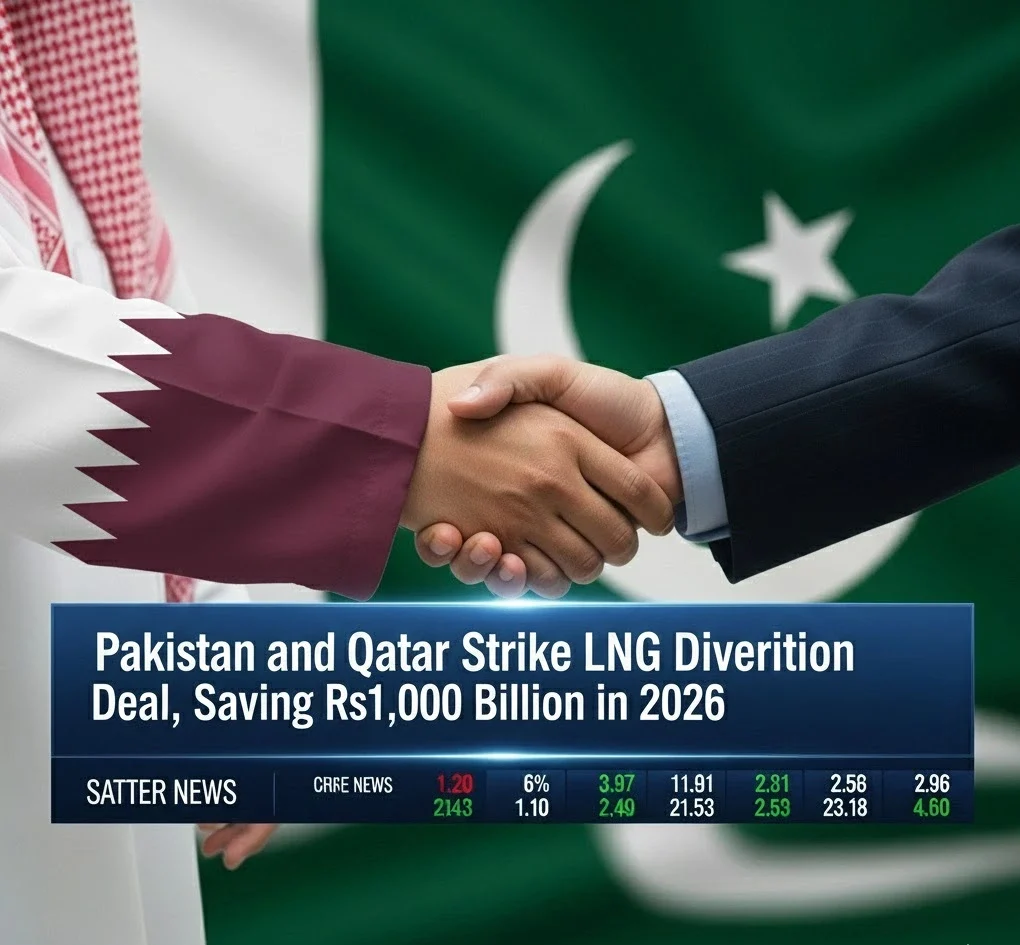
Pakistan Secures Rs1,000 Billion Savings Through LNG Cargo Diversion Deal with Qatar
If you are following Pakistan’s energy sector closely, you will appreciate the significance of the recent agreement between Pakistan and Qatar to divert liquefied natural gas (LNG) cargoes. Under this landmark deal, Pakistan is set to save over Rs1,000 billion in 2026 by redirecting 24 LNG cargoes originally destined for the country to other markets, addressing the issue of low domestic gas demand while safeguarding public finances.
How the Deal Works
The government has confirmed that diverting 24 LNG cargoes will eliminate the need for subsidies to lifeline gas consumers, directly contributing to a massive fiscal saving of over Rs1,000 billion. This diversion follows a “net proceeds differential formula,” which means Pakistan will bear the loss if Qatar sells the LNG in the international market below the contracted price. Any resulting differential will be passed on to LNG consumers, with the Oil and Gas Regulatory Authority (OGRA) allowing public gas utilities to recover these costs.
Reforms Driving Confidence and Investment
This agreement is part of a broader government reform agenda targeting circular debt in the energy sector, which currently stands at a staggering Rs2.6 trillion. Officials report that administrative and policy reforms have not only stabilized the sector but also restored international confidence. For instance, investments from state-owned oil and gas companies in Turkiye and Azerbaijan have materialized, reflecting renewed trust in Pakistan’s energy policies.
Impact on Local Energy Companies
The diversion of LNG cargoes also brings relief to local exploration and production companies. The Oil and Gas Development Company Limited (OGDCL), for example, has received Rs82 billion from the settlement of outstanding invoices. Timely payments by Sui Northern Gas Pipelines Limited (SNGPL) and policy interventions by the Petroleum Division have successfully halted further accumulation of circular debt, ensuring smoother operations for domestic players. OGDC is also receiving returns on Term Finance Certificates (TFCs) according to schedule, with the principal already fully recovered.
International Collaboration and Expansion
Beyond LNG, Pakistan is actively pursuing technical collaborations and investments in upstream petroleum. This month, a technical team from Azerbaijan’s SOCAR will visit OGDC for in-depth discussions on onshore and offshore exploration licenses and potential international partnerships. Additionally, Turkish companies have shown strong interest in joint ventures, with Turkish Petroleum leading seismic and drilling operations in Indus Block-C alongside OGDC, Pakistan Petroleum, and Mari Energies.
Strategic Mining and Energy Projects
Pakistan’s resource development extends beyond energy. The Reko Diq copper and gold mining project is progressing on schedule, with financing secured through a 50:50 equity-to-debt structure. Once operational, the project is expected to generate $1.5–2 billion annually for Pakistan, marking it as the largest-ever financed mining project in the country.
Shale and Tight Gas Development
The government is also fast-tracking shale and tight gas monetization programs. OGDC has initiated a pilot shale project, partnering with international technical experts such as Schlumberger and Baker Hughes. Horizontal fracking operations are scheduled to begin in early 2026, designed to establish both the technical and commercial viability of Pakistan’s shale reserves.
What This Means for You
For businesses, industries, and households relying on natural gas, this deal offers stability in gas pricing and ensures continued access to energy without undue fiscal burden. For investors and energy companies, Pakistan is signaling a renewed commitment to policy stability, transparency, and international collaboration making it an attractive market for investment and joint ventures.
the LNG diversion agreement with Qatar is more than just a cost-saving measure. It is part of a strategic, long-term vision to stabilize Pakistan’s energy sector, attract foreign investment, support local companies, and ensure sustainable energy supply for citizens and businesses alike. By following these developments, you can stay informed about opportunities and policy trends shaping Pakistan’s energy future.