
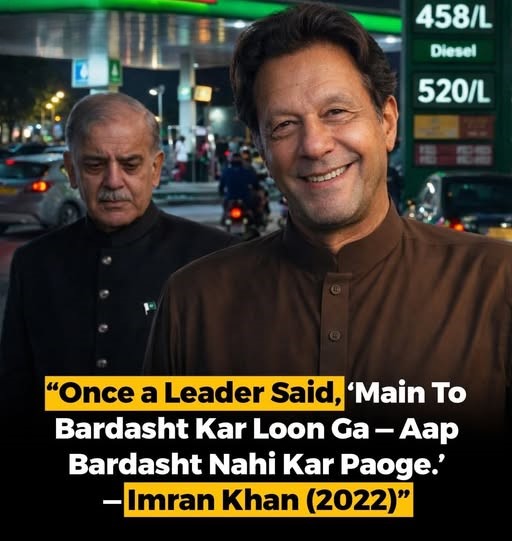
Petrol Price Today Pakistan Rs 458 | 3 April 2026
“Main To Bardasht Kar Lunga, Aap Nahi Kar Sakoge” — Petrol Skyrockets to Rs 458 Per Litre in Pakistan
Imran Khan once made this bold statement. Today, with petrol jumping Rs 137 and diesel Rs 185 in a single day, the people of Pakistan are living through those words — except nobody seems able to bear it anymore.
The Government of Pakistan has announced what can only be described as a historic fuel price hike. Effective from 3 April 2026, petrol now costs Rs 458.41 per litre — up from Rs 321.17. High-speed diesel has surged even more dramatically, climbing from Rs 335.86 to Rs 520.35 per litre. This is the steepest single-day fuel price increase in the country’s recent history.
The announcement was made during a late-night press conference by Finance Minister Muhammad Aurangzeb and Petroleum Minister Ali Pervaiz Malik. The decision, they explained, was driven by soaring international oil prices and Pakistan’s commitments under the IMF programme.
And as the news spread across the country like wildfire, millions of Pakistanis remembered the words of former Prime Minister Imran Khan — words that feel more relevant today than ever before.
“Main to bardasht kar lunga… aap nahi kar sakoge!”
— Imran Khan, Former Prime Minister of PakistanImran Khan made this statement during his time as Prime Minister. But today, with fuel prices reaching uncharted territory, these words have resurfaced across social media, news channels, and kitchen table conversations. The common Pakistani is asking a simple question: if the leader said “main to bardasht kar lunga,” then who exactly is supposed to bear petrol at Rs 458?
Complete Price Comparison: Before and After the Hike
To understand the scale of this increase, here is a side-by-side comparison of petroleum prices before and after the 3 April 2026 revision:
| Fuel Type | Previous Price | New Price | Increase |
|---|---|---|---|
| Petrol (Motor Spirit) | Rs 321.17/litre | Rs 458.41/litre | +Rs 137.24 |
| High-Speed Diesel (HSD) | Rs 335.86/litre | Rs 520.35/litre | +Rs 184.49 |
These figures represent an increase of approximately 43% for petrol and 55% for diesel in a single revision. For context, the previous record-high petrol price in Pakistan’s history was Rs 331.38 per litre, set on 16 September 2023. That record has now been shattered by over Rs 127.
Why Did Petrol Prices Increase So Drastically?
Several factors came together to create what many are calling a perfect storm for fuel prices in Pakistan. Understanding these reasons is essential to grasp why the government had little room to maneuver.
1. Global Oil Prices Surged Due to Middle East Conflict
The ongoing geopolitical tensions in the Middle East have caused international crude oil prices to spike dramatically. Since Pakistan imports a significant portion of its petroleum products, any rise in global crude prices translates directly into higher domestic fuel costs. Oil traders have pushed prices upward amid fears of supply disruptions, and Pakistan is bearing the full brunt of that volatility.
2. The Pakistani Rupee Continues to Weaken Against the Dollar
Oil is traded internationally in US dollars. When the Pakistani Rupee loses value against the dollar, the cost of importing fuel rises proportionally. Over the past several months, the Rupee has faced persistent pressure, and this currency depreciation has significantly inflated the import bill for petroleum products.
3. IMF Programme Conditions Demand Subsidy Removal
Pakistan’s ongoing programme with the International Monetary Fund requires the government to reduce or eliminate fuel subsidies and align domestic prices with international rates. In March 2026 alone, the government spent approximately Rs 129 billion on fuel subsidies. That level of spending was becoming unsustainable, and the IMF had repeatedly called for reforms. Under these conditions, the government felt it had no choice but to pass the cost to consumers.
4. Petroleum Levy and Taxation Adjustments
The federal government relies on the petroleum levy and associated taxes as a significant source of revenue. Adjustments to the levy structure, combined with the need to generate revenue for budgetary requirements, contributed to the final retail price. Every additional rupee in taxes directly adds to what the consumer pays at the pump.
5. Provincial Burden-Sharing Disagreements
Reports indicate that behind-the-scenes discussions between the federal government and provincial administrations failed to produce a workable subsidy-sharing formula. Punjab and Sindh reportedly pushed for full pass-through of price increases to consumers rather than sharing the subsidy burden. This political impasse left the federal government absorbing the full shock — until it could no longer afford to.
How Will This Affect the Common Citizen?
The impact of this price hike will ripple through every corner of the Pakistani economy. Fuel is not just something that goes into your car or motorcycle. It is the backbone of the entire supply chain — from the farm to the factory to the kitchen table.
Transportation Costs Will Skyrocket
Public transport fares are expected to increase immediately. Rickshaw fares, intercity bus tickets, and even ride-hailing services like Careem and InDriver will adjust their rates upward. For the daily wage worker who commutes by motorcycle, the cost of filling up has nearly doubled compared to a few months ago. A full tank that used to cost Rs 3,200 will now cost approximately Rs 4,580.
Food Prices Will Rise Sharply
Diesel powers the trucks that carry food from farms and wholesale markets to shops across the country. With diesel at Rs 520 per litre, freight charges will increase substantially. This means the prices of vegetables, fruits, wheat, rice, milk, and meat will all climb. The consumer at the end of the chain — the household — will pay the most.
Inflation Will Accelerate
Fuel price increases feed directly into the Consumer Price Index. When transportation costs rise, the cost of producing and distributing goods rises too. Economists warn that this single revision could push inflation up by 2 to 4 percentage points in the coming weeks. For a country already dealing with high inflation, this is devastating news.
Small Businesses Face Survival Threat
Small and medium enterprises that depend on transportation — delivery services, food businesses, agricultural traders, construction suppliers — will see their operating costs jump overnight. Many of these businesses operate on razor-thin margins. Some may be forced to shut down, leading to job losses.
Electricity Tariffs May Follow
A portion of Pakistan’s electricity generation depends on furnace oil and diesel. Higher fuel costs for power generation could translate into higher electricity tariffs in the coming months, adding yet another burden on households and businesses alike.
“Main To Bardasht Kar Lunga” — But Can Anyone Actually Bear This?
Imran Khan’s famous words — “Main to bardasht kar lunga, aap nahi kar sakoge” — were a display of political bravado during his time in power. He was speaking about the difficult decisions leaders must make and the resilience they must show. But those words have taken on an entirely different meaning now.
Today, the question is not about whether a leader can bear it. The question is about the motorcycle rider in Dera Ghazi Khan who needs petrol to get to work. It is about the truck driver on the Lahore-Karachi highway whose diesel bill just increased by Rs 185 per litre. It is about the mother in Faisalabad who is watching food prices climb week after week.
Rs 458 per litre is not just a number. It is a weight that falls on the shoulders of 240 million people. And the honest truth is that for most of them, bearing it is not a matter of willpower — it is a matter of survival.
The irony is impossible to ignore. Leaders — past and present — travel in convoys with state-funded fuel. Their grocery bills do not change with diesel prices. Their children’s school vans do not charge them more when petrol goes up. The gap between the political class and the common citizen has never been more visible than it is at Rs 458 per litre.
What Can the Government Do?
While the government’s options are constrained by IMF conditions and global markets, experts suggest several steps that could ease the burden on the public:
Targeted subsidies could be provided to the most vulnerable segments — daily wage workers, public transport operators, and agricultural users — rather than blanket subsidies that benefit everyone equally. This approach would cost less while protecting those who need it most.
Reducing the petroleum levy temporarily could provide immediate relief. The government collects significant revenue through this levy, and even a partial reduction would lower the pump price.
Investing in alternative energy infrastructure — solar power, electric vehicles, and public mass transit systems — would reduce the country’s long-term dependence on imported fuel. These are not overnight solutions, but they are necessary for a sustainable future.
Strengthening the Rupee through economic reforms, increased exports, and foreign investment would reduce the cost of importing oil and gas, thereby lowering fuel prices over time.
What Can Citizens Do to Manage Costs?
While systemic change must come from the government, individuals can take practical steps to reduce the impact of higher fuel prices on their daily lives.
Carpooling and ride-sharing with colleagues or neighbors can cut fuel expenses significantly. If four people share a ride to the same area, each person pays only a quarter of the fuel cost.
Using public transport where available — metros, bus rapid transit, and city bus services — remains cheaper than private vehicles, even with fare increases.
Maintaining vehicles properly ensures better fuel efficiency. Correct tire pressure, regular oil changes, and smooth driving habits can improve mileage by 10 to 15 percent.
Planning trips efficiently by combining multiple errands into a single outing reduces unnecessary driving and saves fuel.
Revising household budgets to account for higher fuel and food costs is essential. Cutting non-essential expenses now can provide a cushion against the inflationary pressure ahead.
Frequently Asked Questions
Final Thoughts
The date 3 April 2026 will be remembered as one of the darkest days for Pakistan’s fuel consumers. A Rs 137 jump in petrol and Rs 185 jump in diesel in a single revision is unprecedented. The economic consequences will unfold over the coming weeks and months — higher transport costs, rising food prices, accelerating inflation, and the slow suffocation of small businesses.
Imran Khan once said, “Main to bardasht kar lunga, aap nahi kar sakoge.” Those words were prophetic in a way perhaps even he did not intend. Because at Rs 458 per litre, the people of Pakistan are indeed struggling to bear it. The motorcycle rider, the rickshaw driver, the shopkeeper, the farmer, the mother managing her household — they are all bearing a burden that grows heavier with every passing day.
The government must act — not just with announcements, but with meaningful, targeted relief for the people who need it most. And the people themselves must demand accountability, transparency, and a clear path toward energy independence. Because if history has taught us anything, it is that fuel prices may go up quickly, but they rarely come down at the same speed.
Disclaimer: This article is for informational purposes only. All prices mentioned are based on the official government announcement effective 3 April 2026. Prices are subject to revision by the Government of Pakistan.