11
11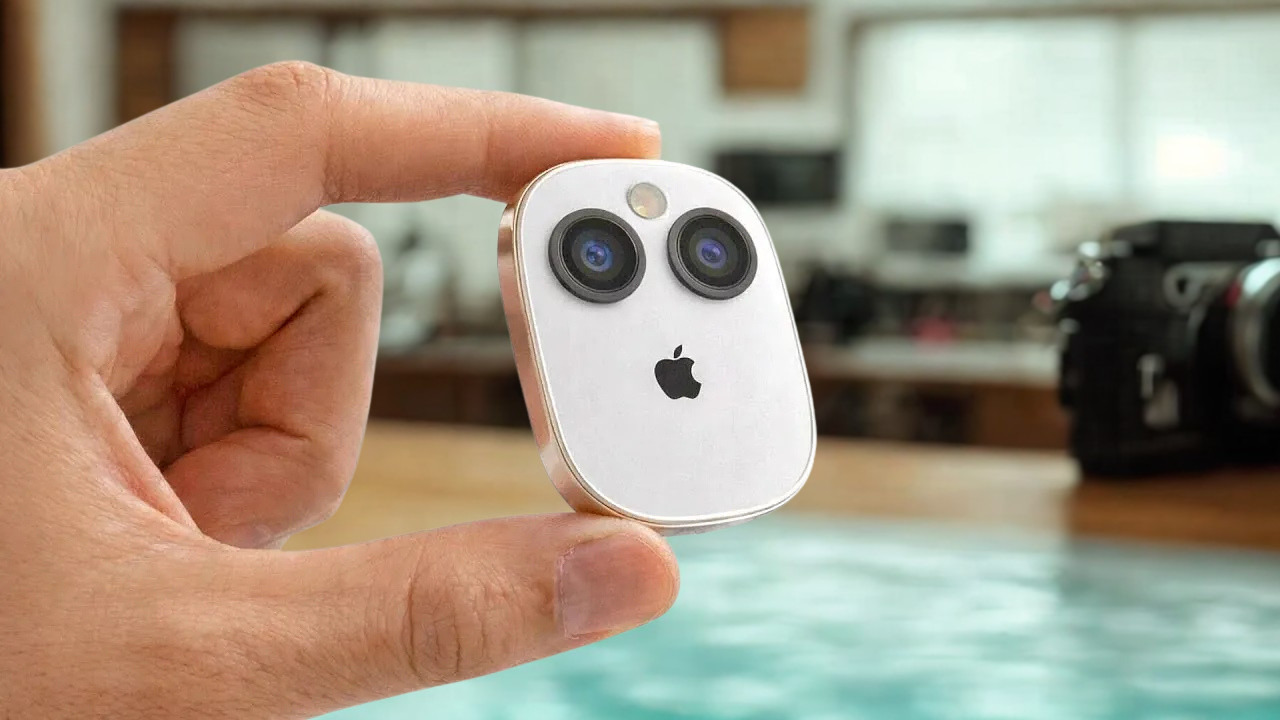
Humane raised $230 million, hired ex-Apple engineers, and launched an AI Pin that reviewers called one of the worst products of 2024. Rabbit raised $10 million on hype alone, shipped the R1, and watched it get dismantled in YouTube reviews within days of launch. Two companies. Two failures. One very clear message — the AI wearable category was broken before it ever got started.
Apple watched all of it. And according to reports, they are building one anyway.
Expected around 2027, the Apple AI Pin is not a reaction to Humane or Rabbit. It is a calculated bet that the category did not fail because the idea was wrong. It failed because the wrong companies tried to build it.
To understand why Apple might succeed, you have to understand why everyone else didn’t.
Humane’s AI Pin had a core problem — it tried to replace the smartphone without giving users anything better than what they already had. The projector was gimmicky. The responses were slow. The battery drained in hours. And at $699 plus a monthly subscription, it asked users to pay premium prices for a worse experience than their $0 Google Assistant already provided. The Verge’s comprehensive review called it “a product that simply doesn’t work well enough.”
Rabbit R1 had the opposite problem — it was cheap, colorful, and exciting in demos. But it shipped software that was unfinished, unreliable, and ultimately replaceable by an Android app. There was no reason for it to exist as hardware.
Both failed for the same underlying reason. They had no ecosystem. No trust infrastructure. No existing relationship with the user’s data, devices, or daily life. They were islands asking you to move there permanently.
Apple is not an island. Apple is the mainland.
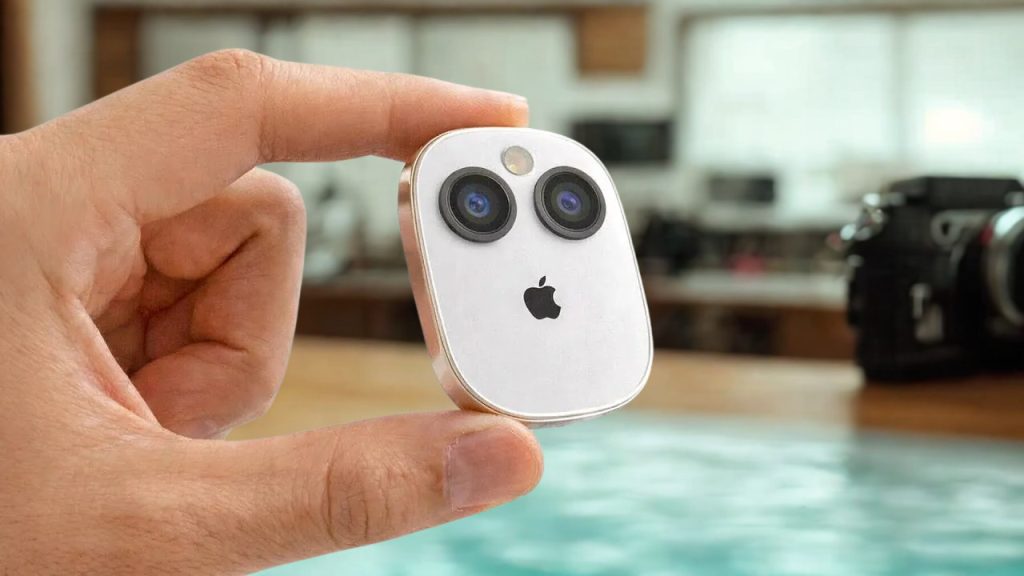
The Apple AI Pin is envisioned as a small circular wearable — described as resembling a thicker Apple AirTag — crafted from aluminum and glass with a single physical button for basic controls. A charging interface similar to Apple Watch connects it seamlessly to the existing ecosystem. No screen. No display. Just intelligence, worn on your body.
The screen-free design is the philosophical statement. Apple is not trying to put a tiny smartphone on your chest. They are trying to remove the screen from the interaction entirely — replacing visual dependency with voice, audio, and ambient awareness.
For a company that built its fortune on beautiful displays, that is a remarkably bold direction.
Dual Cameras — Standard and Wide Angle
The AI Pin ships with two cameras capable of capturing and analyzing your surroundings in real time. This enables augmented reality applications, environmental awareness, and hands-free photography. More importantly, it enables contextual AI — a device that knows what you are looking at and can respond intelligently to your physical environment, not just your typed or spoken queries.
Three Microphones and a Built-In Speaker
Clear audio capture from three microphones means the device works in noisy real-world environments — not just quiet demo rooms. Combined with a speaker for audio responses, the interaction model becomes fully conversational and hands-free. No tapping. No swiping. Just talking.
Generative AI at the Core
The AI Pin runs generative AI capable of processing real-time information and delivering personalized adaptive responses. Directions, questions, task management, environmental analysis — all handled through natural conversation. This is not Siri from 2015. This is Apple’s rebuilt Siri powered by generative AI, informed by its partnership with Google’s Gemini AI, running on hardware designed specifically for this interaction model.
This is the argument that Humane and Rabbit never had access to.
When an Apple AI Pin sits on your chest, it already knows your calendar, your contacts, your messages, your health data from Apple Watch, your location history, your Apple Music library, your saved places in Maps, and your preferences built up across years of iPhone use. It doesn’t need to learn who you are. It already knows.
Humane’s Pin started every interaction from scratch. Apple’s Pin starts every interaction from a complete picture of your life. That difference is not incremental. It is categorical.
Add to that the trust layer. Apple has spent years building a privacy-first reputation — on-device processing, end-to-end encryption, App Tracking Transparency. When a device with dual cameras and three microphones asks users to wear it on their body all day, trust is not optional — it is the product. Apple has that trust in a way no AI startup ever will.
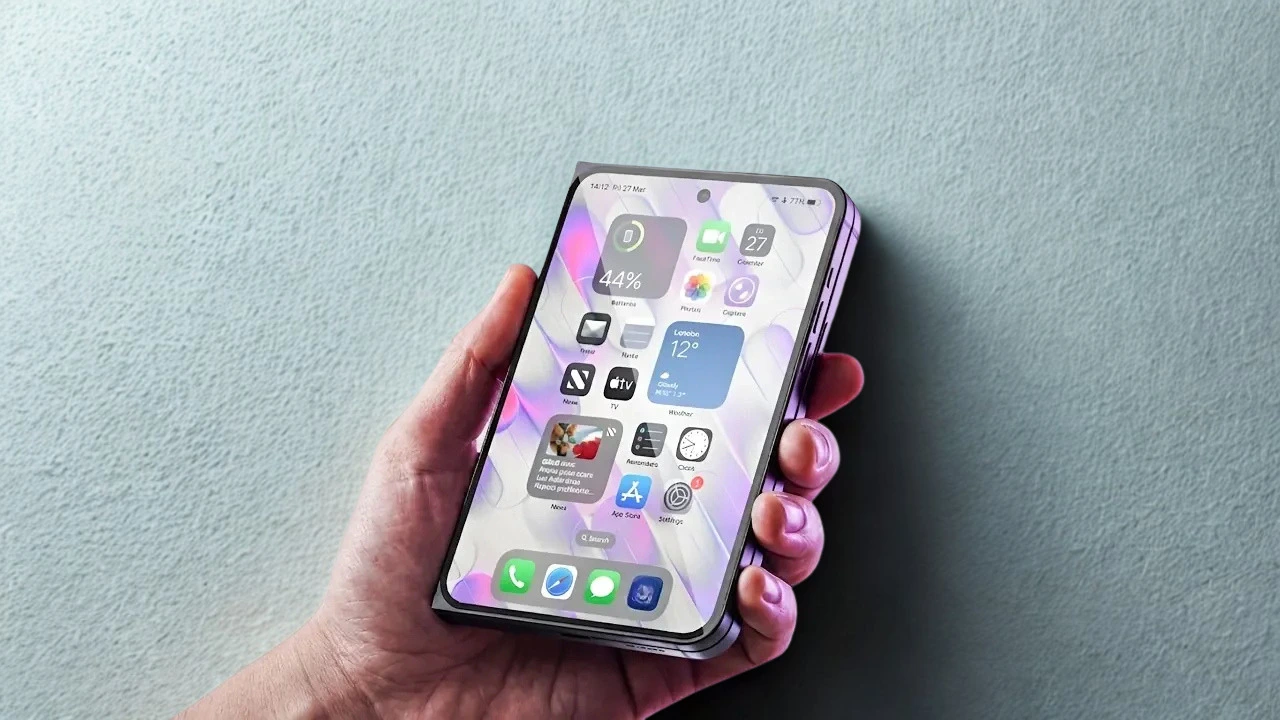
Beyond the features, the AI Pin represents something strategically significant. Apple is simultaneously developing foldable iPhones and screen-free AI wearables — two completely opposite directions. One adds more screen. One eliminates it entirely.
This is not contradiction. This is Apple hedging intelligently on the future of human-computer interaction. They do not know if the next decade belongs to immersive displays or ambient screenless AI. So they are building both. Whichever direction wins, Apple will have a product ready.
No other company in the world is running both bets simultaneously with the resources and ecosystem to execute on either.
Apple AI Pin
Pros:
Cons:
Humane AI Pin — What Went Wrong
Pros:
Cons:
Watch this closely if you are: An Apple power user already deep in the ecosystem who finds smartphone screen time genuinely problematic. A professional who wants hands-free AI assistance during meetings, presentations, or fieldwork without pulling out a phone. An early adopter willing to learn a new interaction model in exchange for a genuinely different technology experience. Anyone who tried Humane or Rabbit and saw the potential buried under the poor execution.
Wait for generation two if you are: Someone who learned from Apple Watch Series 1, AirPods generation one, and Vision Pro that Apple’s first generation products establish the category while generation two delivers the experience. A privacy-conscious user who wants to see how the real-world camera and microphone concerns play out before wearing one daily.
Skip it entirely if you are: Someone fully satisfied with iPhone plus Apple Watch as a complete technology stack. A user who relies heavily on visual information and finds audio-only interaction frustrating. Anyone outside the Apple ecosystem — this device will not function as a standalone product.
Technology analysts tracking the AI wearable space are more optimistic about Apple’s entry than they were about any previous player — but they are not without reservations. The consensus is that Apple has the three things Humane and Rabbit lacked — ecosystem depth, user trust, and the engineering resources to solve battery and privacy problems properly before launch.
The expert view is that Apple will not ship the AI Pin until it clears internal benchmarks that would have made the Humane Pin competitive. Apple’s own statement through behavior — they have not rushed this despite seeing competitors fail — suggests the product will not launch until it is genuinely ready.
The wildcard is the Siri rebuild. The AI Pin lives or dies on AI quality. If Apple’s generative AI overhaul delivers a Siri that is genuinely intelligent, contextually aware, and reliably useful — the AI Pin becomes the most compelling wearable Apple has ever made. If Siri underdelivers again, the hardware cannot save it.
Probably. Not certainly. But probably.
The category did not fail because people do not want ambient AI assistance. It failed because the products that tried to deliver it were underpowered, under-connected, and under-trusted. Apple solves all three of those problems before the device ships.
What Apple cannot fully solve is the behavioral shift required. Wearing a camera on your chest and talking to it in public is still socially awkward in 2026. That was true for Humane too — and no amount of Apple branding eliminates the learning curve of a completely new interaction paradigm.
But if any company can make a new interaction model feel normal, it is the company that made touchscreens feel obvious, wireless earbuds feel invisible, and smartwatches feel essential.
Humane burned the runway. Rabbit proved the prototype. Apple arrives in 2027 with the ecosystem, the trust, and the engineering to actually land this.
The category is not dead. It was just waiting for the right builder.
Bottom line — if you are an Apple user frustrated by screen dependency and excited by ambient AI, the AI Pin’s 2027 window is worth tracking carefully. If you are skeptical after Humane and Rabbit, Apple’s ecosystem advantage is the single most compelling reason this time might genuinely be different.