11
11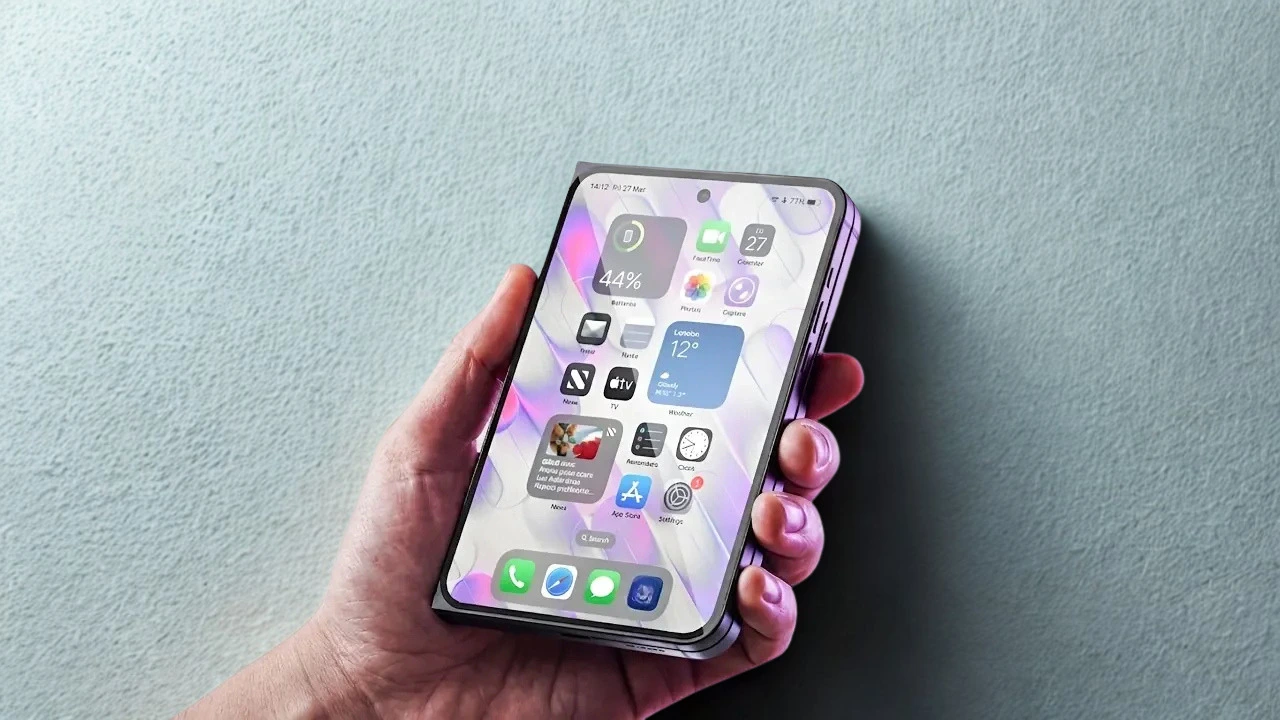
amsung has been folding phones since 2019. Five generations. Billions in R&D. Countless leaks, launches, and marketing campaigns. And every single Galaxy Fold that ever shipped had one thing in common — the crease. Apple hasn’t shipped a single foldable yet. And according to the latest leaks, when they do, the crease will be gone.
That should be embarrassing for Samsung. It should be terrifying for everyone else.
If you have ever held a Galaxy Z Fold and opened it fully, you felt it before you saw it. That ridge running down the center of the display. Samsung called it a feature of foldable technology. Users called it a compromise they learned to live with. Google’s Pixel Fold had it. Honor’s foldables had it. Every foldable on the market right now has it.
The crease became the foldable industry’s accepted flaw — the thing everyone acknowledged but nobody fixed. Until now.
Apple reportedly didn’t accept that compromise. They went back to the engineering problem and built a solution from scratch.
The centerpiece of Apple’s foldable innovation is a custom-designed 3D-printed hinge mechanism specifically engineered to minimize visible creasing on the foldable display. This is not an incremental improvement on existing hinge designs. It is a fundamentally different approach to the mechanical problem that has plagued foldables since day one.
The hinge controls how the display bends, how much stress concentrates at the fold point, and how the screen recovers when opened. Getting this right requires precision that traditional manufacturing methods struggle to achieve consistently. 3D printing allows Apple to create hinge geometries that are simply not possible through conventional production — tighter tolerances, more complex structures, better load distribution across the fold.
The result, according to leaks, is a display that opens flat with no visible ridge. Clean. Seamless. The way a foldable was always supposed to look.
The crease-free hinge is the headline but it is not the whole story. Apple’s foldable is shaping up to be genuinely different from everything in the market.
Form Factor — Where Samsung went tall and narrow, Apple is going shorter and wider — similar to Google’s Pixel Fold approach. A 5.5-inch outer display for everyday phone use and a 7.8-inch inner display for tablet-like experiences. The estimated dimensions of 120.6mm height and 83.8mm width suggest Apple prioritized one-handed usability on the outside and true tablet functionality on the inside.
Under-Display Front Camera — Apple is reportedly embedding the front camera beneath the display entirely, eliminating the notch and punch-hole that interrupt the screen. The inner display becomes truly uninterrupted — no cutouts, no compromises. This alone would be a first for any mainstream foldable.
Limited Launch Strategy — Apple is planning an initial production run of just 7 to 8 million units — less than 10 percent of total iPhone output. This is deliberate. Apple is testing demand, refining manufacturing, and protecting its premium positioning all at once. Scarcity at launch is not a supply chain problem — it is a strategy.
Apple did not rush into foldables. While Samsung iterated through five generations and Google entered the market, Apple watched. They studied what worked, what frustrated users, and what the category still needed. The crease was always the most visible failure. Apple targeted it directly.
Launching a crease-free foldable alongside the iPhone 18 lineup means Apple enters the market not as a follower catching up — but as the brand that solved the problem the entire industry normalized. That narrative is powerful. And in consumer electronics, narrative drives purchasing decisions as much as specs do.
Samsung, Google, and every other foldable maker now face a difficult question — if Apple eliminates the crease on their first attempt, what does that say about why it took everyone else this long?
iPhone Fold
Pros:
Cons:
Samsung Galaxy Z Fold 8 Wide (Current Competition)
Pros:
Cons:
Buy the iPhone Fold at launch if you are: An existing iPhone user ready to move to a foldable without leaving the Apple ecosystem. A professional who wants a device that transitions seamlessly between phone and tablet. A tech early adopter who wants to own the first crease-free foldable. Someone who values display quality and aesthetics above all else in their smartphone.
Wait for iPhone Fold generation two if you are: Someone who has learned from experience that Apple’s second-generation products refine the rough edges of their first. A budget-conscious buyer who wants the technology at a lower entry price. Anyone who needs guaranteed availability — generation one will sell out fast.
Stick with Galaxy Z Fold 8 for now if you are: A deep Android user with no plans to switch ecosystems. A professional who relies on S Pen functionality that Apple has not confirmed. Someone who needs a foldable now and cannot wait for Apple’s uncertain launch timeline.
Industry analysts are nearly unanimous — the iPhone Fold’s crease-free hinge is the single most important foldable innovation since the category launched. Not because it adds a feature, but because it removes the most persistent flaw that defined the entire product category for half a decade.
The expert consensus is that Apple’s entry will do to the foldable market what the original iPhone did to touchscreen phones — it will make everything that came before feel unfinished. Samsung’s response with the Z Fold 8 and Z Fold 8 Wide shows they anticipated this pressure. Whether their crease-reduction technology is enough to compete with a fully crease-free display remains to be seen.
For Apple users specifically, the recommendation is clear — if you have been waiting for a foldable that feels like an Apple product in quality and polish, this is the one. Just be prepared for limited availability and a premium price tag.
Everything.
The crease was the foldable industry’s unspoken agreement — we all know it is there, nobody talks about it, everyone ships it anyway. Apple just broke that agreement. By engineering it away on their first attempt, they have reset consumer expectations permanently.
No one who uses an iPhone Fold with a crease-free display will ever accept a crease again. And that puts every other foldable manufacturer in an impossible position — fix the crease or explain why you haven’t.
Samsung spent five generations telling people the crease was part of the experience. Apple spent those same years building a hinge that proved it didn’t have to be.
One generation. No crease. Game changed.
Bottom line — if you are in the Apple ecosystem and have been waiting for a foldable done right, the iPhone Fold is shaping up to be worth the wait and the premium. If you are on Android and watching this unfold, expect Samsung to respond fast — because Apple just made the crease impossible to defend.