
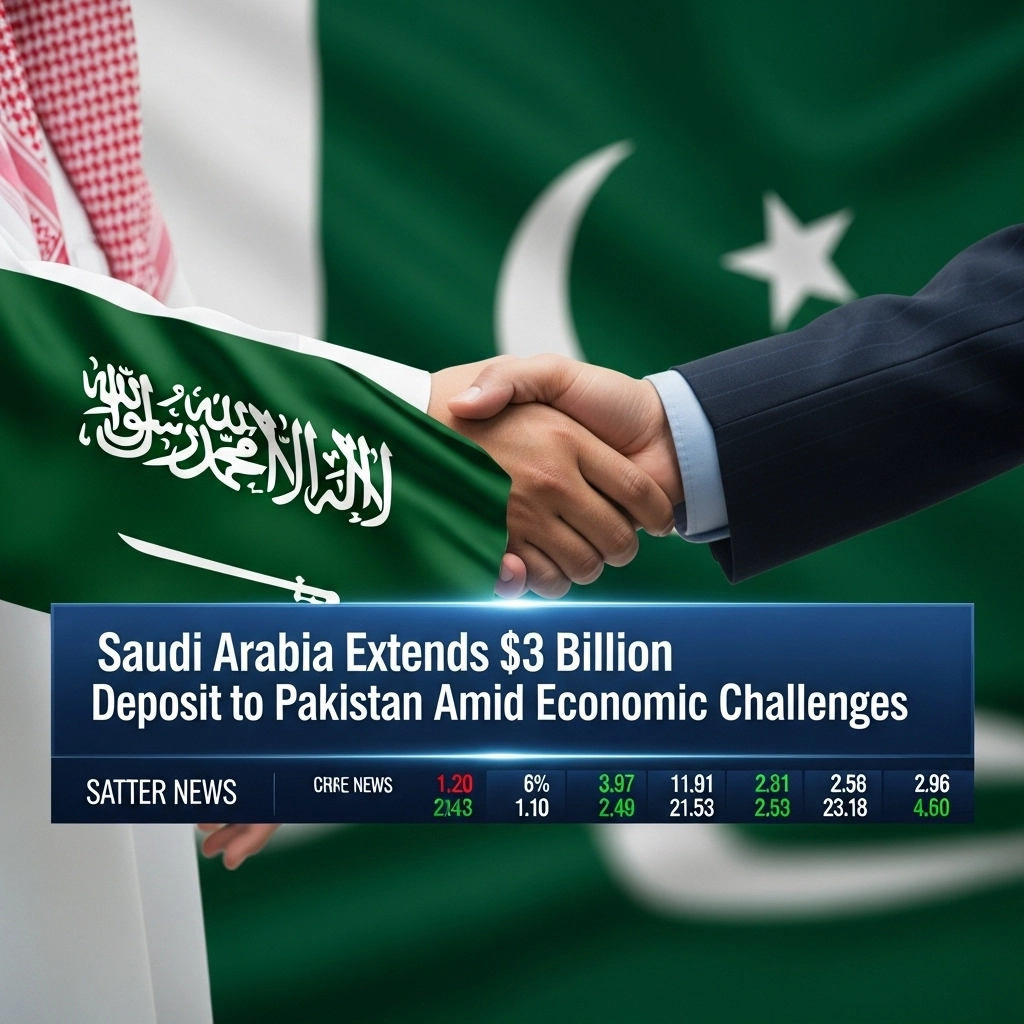
Saudi Arabia Extends $3 Billion Deposit to Pakistan Amid Economic Challenges
ISLAMABAD / KARACHI: Saudi Arabia has extended the maturity of its $3 billion deposit with the State Bank of Pakistan (SBP) for an additional year, providing a crucial financial lifeline amid ongoing liquidity pressures and external financing challenges. The rollover, facilitated through the Saudi Fund for Development (SFD), reflects Riyadh’s continued support for Pakistan’s economic stability.
The deposit, originally set to mature on December 8, 2025, will now remain with the SBP until December 2026. Officials highlighted that this extension strengthens Pakistan’s foreign exchange reserves, ensuring the country can meet its International Monetary Fund (IMF) benchmarks and maintain macroeconomic stability.
“This will help in strengthening the foreign exchange reserves of Pakistan and contribute to the country’s economic growth and development,” said the SBP in an official communication.
Current Reserve Status
As of November 28, 2025, Pakistan’s total liquid foreign currency reserves stood at $19.59 billion, including:
- $14.57 billion held by the central bank
- $5.01 billion with commercial banks
While SBP reserves rose modestly by $14 million during the week, they have remained largely stable over recent months. Analysts note that maintaining this reserve cushion is critical for Pakistan to meet import requirements and support the rupee.
Debt Management and Economic Outlook
Speaking at the Pakistan Women Entrepreneurship Day 2025 in Karachi, SBP Governor Jameel Ahmad noted that Pakistan’s external debt-to-GDP ratio has improved from 31% to 26%, marking the first meaningful reduction in years. “Between 2015 and 2022, external debt increased by $6.4 billion annually. Now the direction has changed. We are stabilising instead of continuously accumulating debt,” he said.
The governor also projected that remittances would exceed $40 billion this fiscal year, up from $38 billion last year, while forecasting a current account deficit between 0% and 1% of GDP despite rising imports.
Analysts’ Perspective
Waqas Ghani Kukaswadia, Research Head at JS Global, described the Saudi deposit rollover as expected, noting that Pakistan plans to refinance or roll over nearly $16 billion this fiscal year. He explained that support from countries like Saudi Arabia and China, alongside multilateral institutions, is already embedded in SBP projections.
“The IMF reserve threshold for the current fiscal year is $17.7 billion, and SBP aims to maintain reserves above $17 billion. Last year’s $14 billion target was met, but this year’s goal is higher,” he added.
Public Debate and Structural Concerns
Despite the short-term relief, policy analysts caution that Pakistan remains heavily dependent on Gulf support rather than achieving long-term fiscal sustainability. Repeated rollovers, while stabilizing the reserves, delay necessary reforms in areas such as:
- Export competitiveness
- Productivity improvements
- Governance and regulatory reforms
- Attracting sustainable foreign investment
Some regional observers also view Saudi assistance as a strategic investment, potentially carrying future geopolitical expectations tied to defense cooperation or foreign policy alignment.
Economist Muzammil Aslam, K-P Government Adviser, noted that the rollover reflects financial vulnerability rather than outright success. “Pakistan pays interest—around 4% previously and likely near 6% now. We have not returned any portion of short-term Gulf deposits in four years,” he said, estimating that total rolled-over deposits from Saudi Arabia, China, and the UAE amount to $10–12 billion.
He further warned, “There is no real foreign investment, only announcements. The deposits act like a borrowed cushion that Pakistan has already spent. The next rollover will depend on policy and structural reforms, not goodwill alone.”
Implications and Strategic Significance
The Saudi deposit extension provides Pakistan with a one-year financial runway, allowing policymakers to manage debt, stabilize reserves, and implement IMF-linked restructuring. However, it underscores a fragile economic equilibrium, heavily reliant on:
- Diplomatic goodwill
- Remittance inflows
- IMF programme continuity
For now, the rollover strengthens reserves and eases immediate debt pressure, giving the country breathing space. The critical question for Pakistan is whether this period will be used to implement sustainable fiscal reforms or merely delay structural adjustments.
Key Takeaways
- Saudi Arabia has extended a $3 billion deposit with the SBP to December 2026.
- Pakistan’s total liquid foreign reserves stand at $19.59 billion.
- External debt-to-GDP ratio has fallen to 26%, with stabilization replacing rapid accumulation.
- Remittances are projected to exceed $40 billion this fiscal year.
- Analysts warn that long-term sustainability requires structural reforms beyond temporary rollovers.