
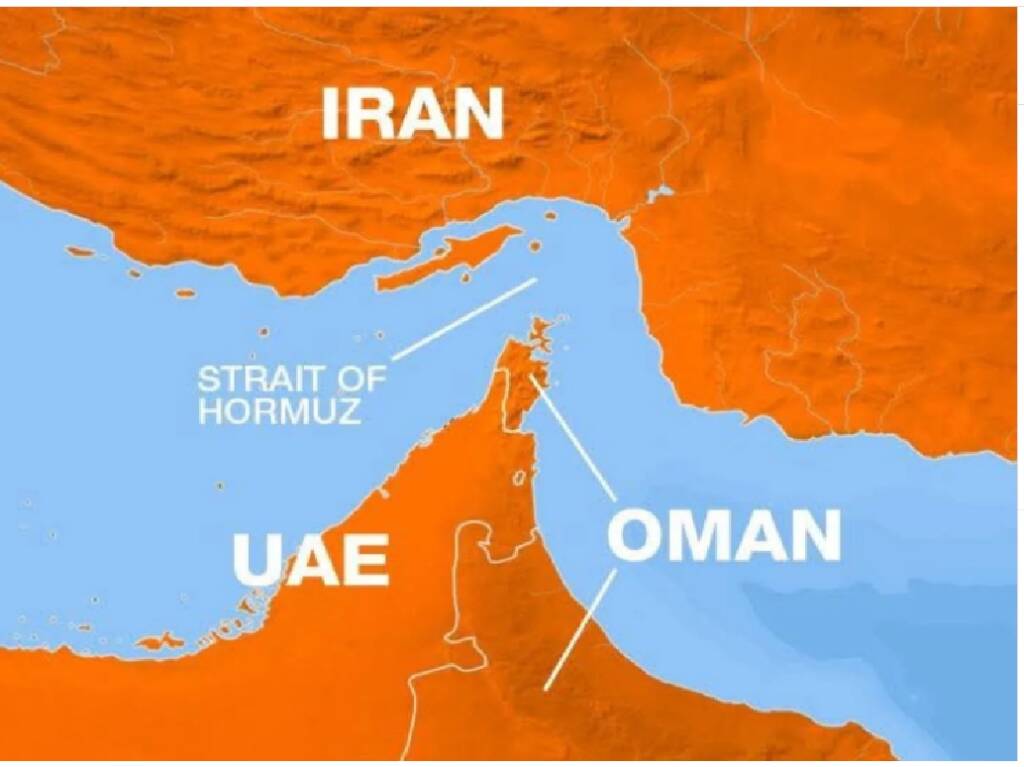
Why Closing 21 Miles of Water Could Push Oil to $130 and Beyond
Crude oil prices have climbed above $110 a barrel after several Middle Eastern producers curtailed output as the Strait of Hormuz remained closed amid the escalating Iran war — raising fears of a prolonged global supply disruption unlike anything seen in the history of the strait.
Prices Hit Historic Levels
U.S. benchmark West Texas Intermediate (WTI) jumped 20% to $109.27 a barrel, while global benchmark Brent crude rose more than 18% to $110.70. U.S. crude has now surged approximately 35% over the past week — its largest weekly gain since futures trading began in 1983. Brent similarly posted a 28% weekly gain, its biggest leap since April 2020.
The dramatic rally comes as key Gulf producers have been forced to scale back output due to logistical constraints caused by the closure of the Strait of Hormuz — the narrow 21-mile waterway between Iran and Oman through which roughly one-fifth of the world’s daily oil supply typically passes.
What Triggered the Shutdown?
The crisis began on February 28, 2026, following joint military strikes by the United States and Israel on Iran under Operation Epic Fury — a coordinated campaign targeting Iranian leadership and nuclear infrastructure that included the killing of Supreme Leader Ali Khamenei.
In retaliation, Iran’s Islamic Revolutionary Guard Corps (IRGC) officially declared the strait closed on March 2, threatening any vessel attempting passage. Iranian drone and rocket attacks on tankers followed almost immediately. At least five tankers have been damaged, two personnel killed, and over 150 ships are now stranded outside the strait awaiting safe passage.
Tanker transits through the waterway collapsed from an average of 24 vessels per day to just four within 24 hours of the shutdown — an 83% drop — with most remaining traffic limited to Iranian-flagged ships and vessels closely tied to China.
Producers Forced to Cut Output
Kuwait, OPEC’s fifth-largest producer generating around 2.6 million barrels per day, announced precautionary cuts to both crude production and refinery output, citing Iranian threats to shipping. Kuwait’s state-owned Kuwait Petroleum Corporation described the cuts as temporary, stating it “remains fully prepared to restore production levels once conditions allow.”
JPMorgan has estimated that production cuts across the Gulf could exceed 4 million barrels per day by end of next week if the strait remains closed. Storage pressure is mounting across Gulf producers, as tankers refuse to risk passage through the waterway, leaving crude with nowhere to go.
LNG Markets Equally Shaken
Beyond oil, the crisis has upended global liquefied natural gas (LNG) markets. Qatar — the world’s largest LNG exporter — shut down production at its two main facilities, Ras Laffan and Mesaieed Industrial City, following Iranian attacks on its infrastructure.
Roughly 20% of the world’s LNG exports transit the Strait of Hormuz, almost all originating from Qatar. European natural gas benchmark TTF futures nearly doubled within 48 hours before pulling back slightly following reports of Iranian diplomatic outreach. Daily freight rates for LNG tankers jumped more than 40% on Monday alone.
Global Ripple Effects
The shock has reverberated across multiple fronts:
- Insurance premiums on tankers transiting Gulf waters have surged to six-year highs. Analysts at Mizuho Bank estimate the “war premium” adds between $5 and $15 per barrel to effective oil costs.
- Alternative routes such as the Cape of Good Hope — around the southern tip of Africa — are being used by rerouted vessels, adding weeks to delivery times and tens of thousands of dollars in additional fuel and operational costs.
- OPEC+ has pledged to boost output by 206,000 barrels per day to offset some of the disruption, though analysts describe this as modest relative to the scale of potential lost supply.
- Asia faces the sharpest exposure, with China, India, Japan, and South Korea accounting for nearly 70% of crude shipped through the strait. India, which sources over 60% of its oil imports from the Middle East, faces a dual shock — rising crude costs and higher LNG contract prices simultaneously.
Washington’s Response
U.S. President Donald Trump said the war was “already won” and pledged that the U.S. Navy would begin escorting tankers through the Strait of Hormuz as soon as possible. U.S. Energy Secretary Chris Wright expressed cautious optimism, stating shipping activity through the strait could begin normalizing once Iran’s ability to threaten commercial vessels is neutralized.
However, markets have remained skeptical. Steadily rising prices indicate that Trump’s assurances have so far done little to calm traders, with Mizuho Bank noting in a research note that naval escorts “mitigate — but do not eliminate — enduring upside risks to oil prices.”
Meanwhile, Iranian state-linked reports indicated that Mojtaba Khamenei, son of the late Supreme Leader, has been named the country’s new supreme leader — a signal that Iran’s leadership structure is reconstituting itself, with the conflict unlikely to end soon.
What Analysts Are Saying
Gregory Daco, Chief Economist at EY-Parthenon, warned that if disruptions persist, oil prices could remain above $100 per barrel through the end of the year, with European natural gas prices potentially surging 150%. Such an outcome, he cautioned, risks tipping the global economy toward recession.
Claudio Galimberti, Chief Economist at Rystad Energy, described the Hormuz situation as something the world has “not seen anything like in pretty much the history of the strait,” comparing it to “blocking the aorta in a circulatory system.”
Notably, Iran has not needed to implement a full naval blockade to achieve an effective halt in ship traffic. Selective drone and rocket attacks have been sufficient to deter shipping companies and their insurers from taking the risk — making the closure both potent and difficult to counter without direct military intervention.
Impact on Pakistan
For Pakistan, already reeling from a record Rs55 per litre fuel price hike announced last week — itself a direct consequence of the Hormuz crisis — further oil price rises at the global level would translate into additional pressure on already-strained import bills and foreign exchange reserves.
Pakistan Railways has already revised fares upward, and public transport operators in Lahore and other cities have followed suit. Economists warn that if oil remains above $100 per barrel for an extended period, a second round of domestic fuel price increases may become unavoidable.
The government has been exploring alternative oil supply routes, including through Saudi Arabia’s Red Sea port of Yanbu, to reduce dependence on Gulf shipments affected by the Hormuz closure.