

Income Tax Ordinance 2001 – Complete Guide (Updated up to 30 June 2024)
If you’ve ever filed taxes in Pakistan, you’ve likely heard of the Income Tax Ordinance, 2001. This law is the foundation of Pakistan’s income tax system, defining who needs to pay tax, how it’s calculated, and what exemptions or deductions you might be eligible for.
The updated Income Tax Ordinance 2001 (amended up to 30 June 2024) ensures that the tax laws reflect the most recent changes introduced through annual Finance Acts. Whether you’re a salaried person, business owner, or tax consultant, understanding its main sections will help you stay compliant and take advantage of legal benefits.
What Is the Income Tax Ordinance, 2001?
The Income Tax Ordinance 2001 (Pakistan) came into effect to replace the 1979 Act. It provides a comprehensive framework for:
In short, this law governs everything about income tax in Pakistan, from your annual return filing to withholding tax (WHT) and advance tax.
Key Objectives of the Ordinance
- Simplify the tax structure and documentation process.
- Increase compliance by defining clear filing obligations.
- Broaden the tax base by bringing more people into the system.
- Provide relief to specific sectors through exemptions and rebates.
- Ensure transparency in tax collection and refund systems.
Major Sections of the Income Tax Ordinance 2001
Here are some of the most important and commonly searched sections of the law, summarized for your understanding.
1. Section 12 – Salary Income
This section defines what counts as salary income, including allowances, bonuses, and benefits. Employers are responsible for deducting withholding tax at source under Section 149.
2. Section 21 – Deductions Not Allowed
Certain expenses are not allowed as deductions while calculating taxable income. Understanding this helps businesses avoid common mistakes during filing.
3. Section 37 – Capital Gains
This section explains how capital gains on property, shares, and other assets are taxed, including holding period rules and exemptions.
4. Section 116 – Statement of Assets
If you’re an individual or an AOP, you must file a wealth statement showing your assets and liabilities each year.
5. Section 147 – Advance Tax
Every business or professional earning income must pay advance tax during the year, based on estimated profits. This reduces the burden at year-end.
6. Section 149 – Tax Deduction from Salary
Employers must deduct tax at source each month from employees’ salaries. The deducted amount is adjustable against the employee’s annual tax liability.
7. Section 153 – Tax Deduction on Services and Supplies
Businesses must withhold tax on payments made for services, goods, and contracts. This helps the government collect revenue efficiently throughout the year.
8. Section 159 – Exemption Certificates
If you qualify for tax exemption or a reduced deduction rate, you can apply for an exemption certificate from the FBR under this section.
9. Section 181 – Registration of Taxpayers
Every taxpayer must register with the Federal Board of Revenue (FBR) and obtain an NTN (National Tax Number) before filing a return.
10. Section 182 – Penalties
Failure to file returns, pay taxes, or provide accurate information may result in penalties under Section 182, including fines and legal action.
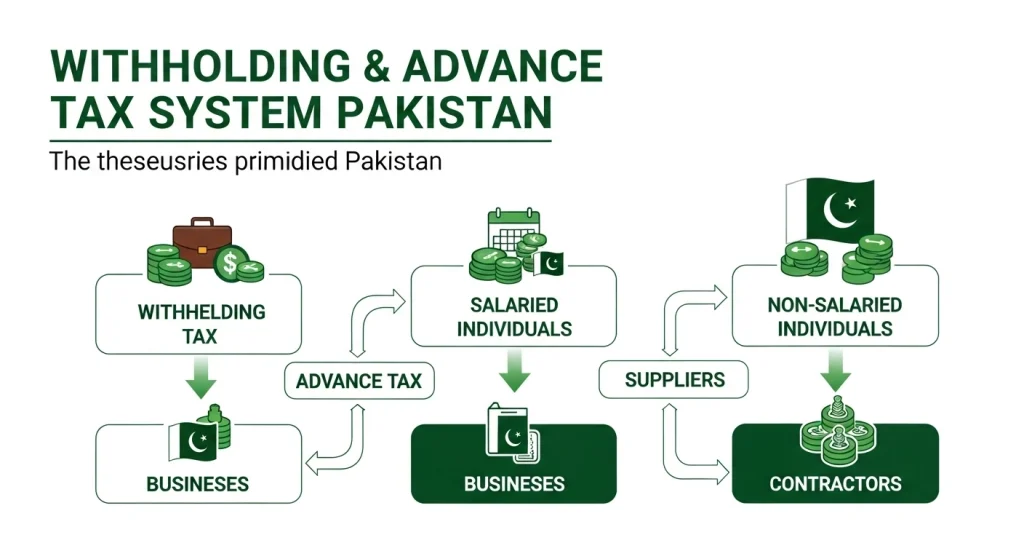
Withholding & Advance Tax System
The withholding tax system ensures that taxes are collected at the source of income, whether it’s salary, rent, or services.
By complying with these sections, you avoid late payment penalties and ensure smooth processing of your Income Tax Return.
Schedules of the Income Tax Ordinance 2001
The Ordinance includes detailed schedules that define tax rates, exemptions, and depreciation rules.
If you want to check the latest tax slabs or exemption updates, refer to the official PDF of the Ordinance amended up to June 2024.
Agricultural Income & Other Provisions
While agricultural income is exempt from federal income tax, it falls under provincial tax laws. However, Section 41 provides conditions where certain agricultural activities may still be considered under income tax jurisdiction.
Why You Should Read the Updated Income Tax Ordinance 2001
Reading or downloading the latest version of the Ordinance helps you:
Download Income Tax Ordinance 2001 PDF (Amended up to 30 June 2024)
You can download the official consolidated version of the Ordinance (amended up to June 2024) directly from the Federal Board of Revenue (FBR) or your trusted legal source for accurate reference.
Frequently Asked Questions (FAQ)
Q1. What is the Income Tax Ordinance 2001?
It’s Pakistan’s primary tax law that governs the assessment, collection, and administration of income tax.
Q2. How often is it updated?
It’s updated annually through the Finance Act, with amendments integrated into the consolidated version each year.
Q3. Where can I get the latest PDF?
You can download the Income Tax Ordinance 2001 PDF (amended up to 30 June 2024) from the FBR website or any authentic government publication.
Q4. Does this law apply to everyone?
Yes, all individuals, businesses, and organizations earning taxable income in Pakistan are subject to this law unless exempted.
Final Thoughts
The Income Tax Ordinance, 2001 is the cornerstone of Pakistan’s tax system. Understanding its sections, schedules, and updates helps you file your taxes correctly and legally.
If you want to become a tax filer, start by reading the updated ordinance, register on IRIS (FBR Portal), and file your tax return before the annual deadline.