
Black Rain Falls Over Tehran Following Strikes on Iranian Oil Facilities
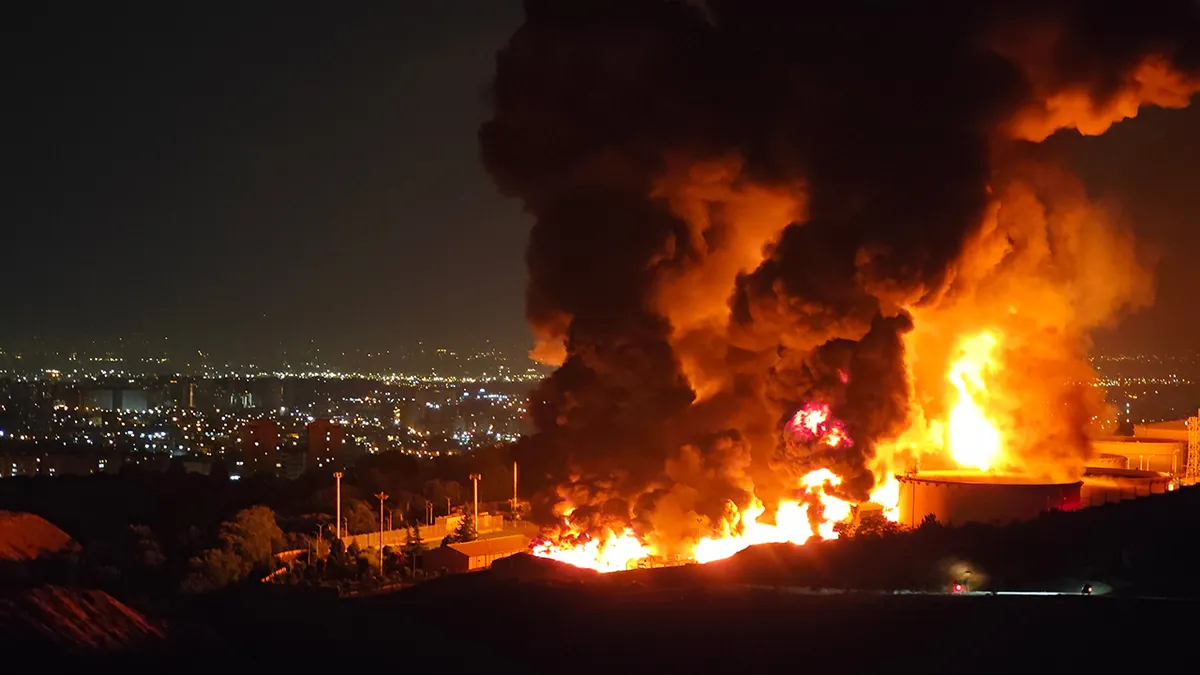
Residents of Tehran looked up in disbelief on March 8, 2026, as rain began to fall — not the clear gray of a winter storm, but thick and black, saturated with oil and toxic residue from burning fuel depots struck by Israeli and U.S. forces the night before. The sky above the city was blanketed in dense, dark clouds as fires raged at five oil facilities in and around the Iranian capital.
“The rain is black. I can’t believe it — I’m seeing black rain,” said Kianoosh, a Tehran resident who spoke to journalists from his apartment window, watching the oily droplets streak down the glass.
Strikes on Military Fuel Infrastructure
The Israeli Defense Forces confirmed that the targeted fuel depots near Tehran served Iran’s military directly. “The military forces of the Iranian terror regime make direct and frequent use of these fuel tanks to operate military infrastructure,” the IDF said in an official statement. Iranian state television reported that four people were killed in the strikes across five oil facilities.
Senior CNN correspondent Frederik Pleitgen, reporting from the ground, described the sky over the city as covered in “very thick black clouds” with rainwater visibly darkened and contaminated. Iran’s environmental authorities issued urgent advisories urging residents to stay indoors to avoid respiratory problems and other health consequences from the toxic rainfall.
A Conflict With a Growing Human Toll
The black rain over Tehran marks a visible and visceral new dimension to a conflict that has rapidly escalated since U.S. and Israeli forces struck Iran on February 28. In just over a week of open hostilities, more than 1,300 people have been killed inside Iran and approximately 300 in Lebanon, according to official figures from both countries.
The political landscape inside Iran shifted dramatically amid the crisis. Following the death of Supreme Leader Ayatollah Ali Khamenei, top clerics announced the selection of his son, Mojtaba Khamenei, as his successor — a decision that has fueled debate about Iran’s direction at one of its most vulnerable moments.
Global Oil Markets Shaken
The strikes on Iranian energy infrastructure sent immediate shockwaves through global oil markets. Brent crude surged 8.5% to $92.69 a barrel, while benchmark U.S. crude climbed 12.2% to $90.90 a barrel — the highest levels seen since 2023. Analysts warn that prolonged disruption to Iranian production capacity could keep prices elevated for weeks.
For ordinary Tehranis, however, the more immediate concern remained closer to home: the black-stained streets, the acrid smell in the air, and the uncertainty of what the coming days would bring.