
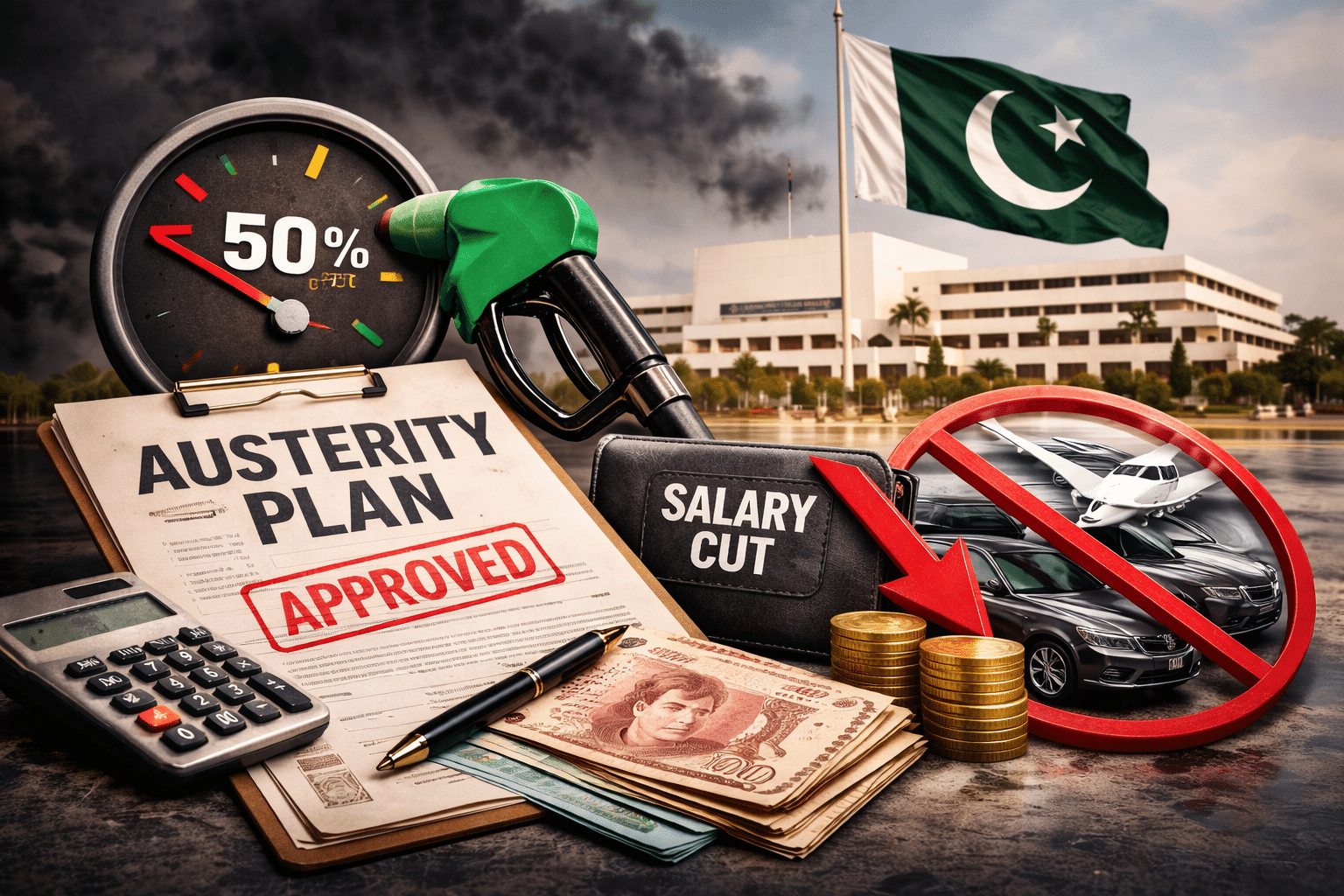
Govt Cuts Salaries: Officials Face Reduced Pay & Benefits
The Pakistani federal government has introduced comprehensive austerity measures including salary cuts, restrictions on foreign travel, and reduced fuel allowances for government officials to address mounting economic pressures. These sweeping reforms, approved in a high-level meeting led by Prime Minister Shehbaz Sharif, aim to save billions in public expenditure while maintaining essential government operations.
⚡ Quick Summary
- Ministers and senior officials voluntarily forfeit two months’ salaries
- Grade 20+ officials face two-day salary deductions from monthly pay
- 20% reduction in non-development budgets saves Rs. 22 billion federally
- Complete ban on official foreign trips except essential travel
- New procurement restrictions until June 2026
What Are Government Austerity Measures?
Government austerity measures are defined as systematic policies designed to reduce public spending and eliminate unnecessary expenditures during economic challenges. These comprehensive cost-cutting initiatives target administrative expenses, official perks, and non-essential government operations to preserve public funds for critical national priorities.
Latest Updates on Salary Cuts and Budget Reductions
The newly approved austerity policy introduces immediate financial adjustments across all government levels. Federal and provincial ministers, advisers, and special assistants will voluntarily surrender two complete months of their salaries and allowances, demonstrating leadership commitment to national fiscal responsibility.
Government officials in Grade 20 and above, particularly those earning more than Rs. 300,000 monthly, will experience salary deductions equivalent to two working days. This targeted approach ensures higher-earning public servants contribute proportionally to national cost-saving efforts while protecting lower-grade employees from financial hardship.
The 20% reduction in non-development budgets across federal and provincial departments represents a significant fiscal adjustment for the fourth quarter of the current fiscal year. According to official estimates, this single measure will generate savings of approximately Rs. 22 billion at the federal level alone. These developments align with broader Economy & Business reforms currently being implemented nationwide.
How the New Travel and Procurement Restrictions Work
The government has implemented a comprehensive ban on official foreign visits for cabinet members, parliamentarians, and government officials. This restriction covers all non-essential international travel, with exceptions granted only for critical diplomatic missions or emergency situations requiring prior approval from designated authorities.
Travel Guidelines and Requirements
All approved government officials traveling abroad must now use economy class accommodations regardless of their funding source or administrative grade. This policy eliminates previous business class and first-class travel privileges, ensuring uniform cost standards across all official international trips.
The procurement restrictions extend until June 2026, prohibiting the purchase of new durable goods across government departments. Any information Technology equipment purchases require prior review and approval from both the National Information Technology Board (NITB) and relevant strategy committees.
Who Benefits from These Austerity Measures
These comprehensive spending reductions directly benefit Pakistani taxpayers by preserving public funds for essential services including healthcare, education, and infrastructure development. The saved resources can be redirected toward critical national priorities while reducing the overall fiscal burden on the national treasury.
Citizens will experience improved government accountability as these measures demonstrate official commitment to responsible financial management during challenging economic periods. The policy creates a precedent for sustainable public spending that prioritizes essential services over administrative luxuries.
Small businesses and local suppliers may also benefit as government departments focus spending on necessary operations rather than discretionary purchases. This focused approach ensures public funds support genuine economic activity rather than unnecessary administrative expenses.
Implementation Timeline and Key Dates
The austerity measures take immediate effect following the high-level government meeting chaired by Prime Minister Shehbaz Sharif. Salary cuts and allowance reductions began implementation in the current fiscal quarter, with departments required to adjust payroll systems accordingly.
| Measure | Implementation Period | Expected Savings |
|---|---|---|
| Salary Cuts | Immediate (2 months for ministers) | Significant administrative cost reduction |
| Foreign Travel Ban | Immediate (exceptions only) | Complete elimination of non-essential travel costs |
| Procurement Restrictions | Until June 2026 | Long-term equipment and asset cost savings |
| Budget Reduction | Fourth Quarter Current FY | Rs. 22 billion federal level |
Impact on Technology and Digital Infrastructure
The new procurement guidelines significantly affect government technology purchases, requiring enhanced oversight through NITB approval processes. This ensures all digital infrastructure investments align with national priorities while eliminating redundant or unnecessary technology acquisitions.
Government departments must now justify technology purchases through comprehensive evaluation processes, potentially extending procurement timelines but ensuring better value for public money. This approach supports sustainable Technology development while maintaining fiscal responsibility.
Frequently Asked Questions
How long will these austerity measures remain in effect?
The salary cuts for ministers span two months immediately, while procurement restrictions continue until June 2026. Foreign travel restrictions and budget reductions remain active based on ongoing economic conditions and government review.
Which government officials are affected by salary cuts?
Ministers, advisers, and special assistants voluntarily forfeit two months’ complete salaries. Officials in Grade 20 and above earning over Rs. 300,000 monthly face deductions equivalent to two days’ salary from their regular pay.
Are there exceptions to the foreign travel ban?
Yes, essential official trips receive approval through designated authorities. All approved international travel must use economy class accommodations regardless of funding source or official grade level.
How much money will these measures save?
The 20% non-development budget reduction alone saves approximately Rs. 22 billion at the federal level. Combined with salary cuts, travel restrictions, and procurement limitations, total savings are expected to be substantially higher.
Can government departments still purchase essential technology equipment?
Essential technology purchases require prior approval from the National Information Technology Board (NITB) and relevant strategy committees. All requests must include comprehensive justifications and strategic alignment documentation.
📚 Related Articles You May Like
Conclusion and Next Steps
Pakistan’s comprehensive austerity measures represent a decisive response to economic challenges, demonstrating government commitment to fiscal responsibility and public resource conservation. These policies balance necessary cost reductions with maintained essential services, creating a sustainable framework for public spending.
Citizens should monitor implementation progress through official government channels and Pakistan News updates. The success of these measures depends on consistent enforcement and public support for responsible governance during challenging economic times.
Stay informed about ongoing policy developments by following our comprehensive coverage of government initiatives and economic reforms. Source: ProPakistani