
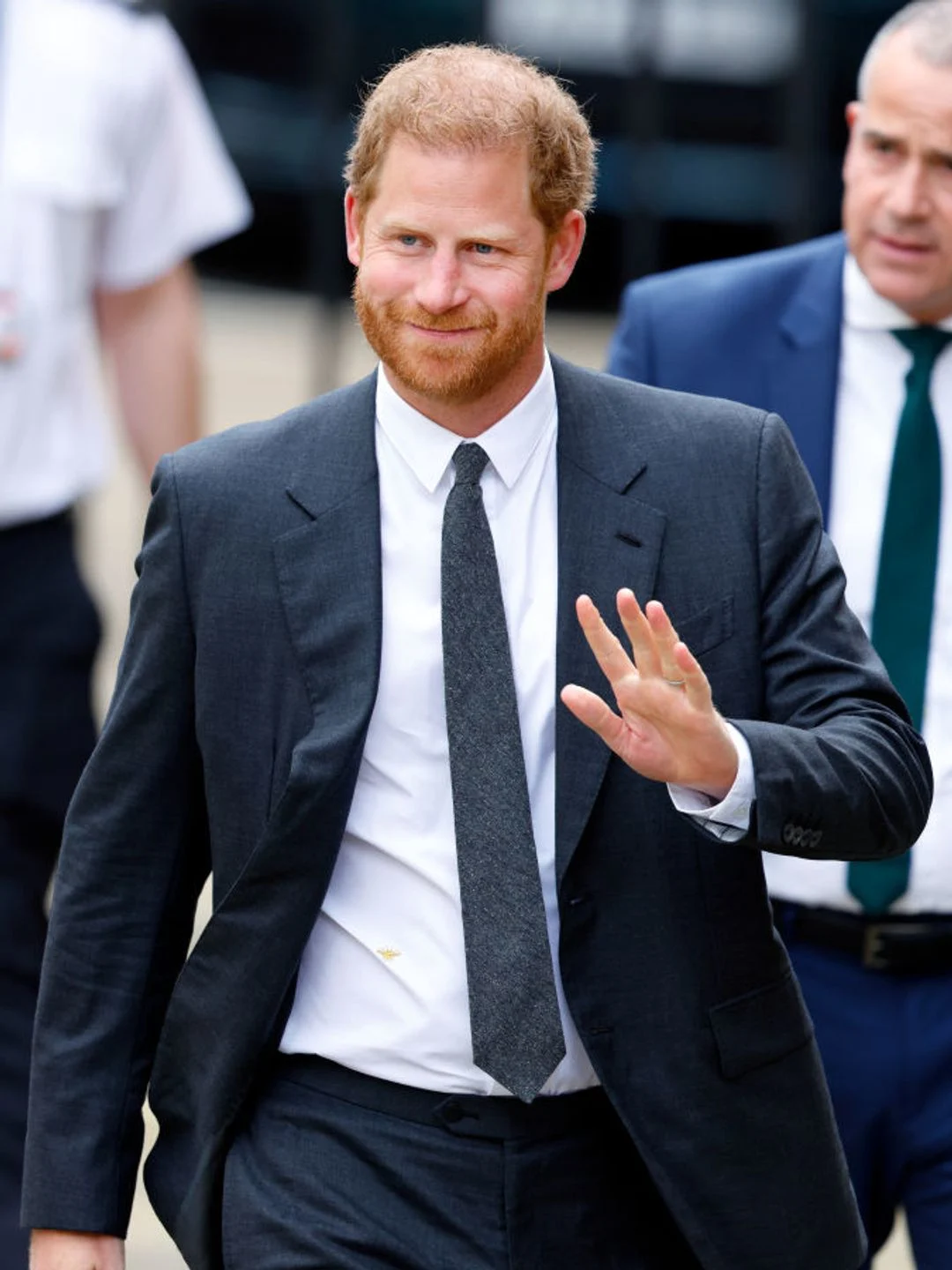
Prince Harry, Duke of Sussex A Full Portrait to 2026
Early Life and Family Background
Prince Harry was born Henry Charles Albert David on 15 September 1984 at St Mary’s Hospital in Paddington, London. He is the younger son of King Charles III (then Prince Charles) and the late Diana, Princess of Wales. At his christening on 21 December 1984, held at St George’s Chapel, Windsor Castle, he was given his full name but among family, friends and later the public, he became and remained simply “Harry.” Raised alongside his older brother Prince William, Prince of Wales, Harry spent childhood years between royal residences such as Kensington Palace and Highgrove House in Gloucestershire.
From early on, his upbringing was shaped significantly by his mother, Diana. She sought to broaden her sons’ horizons by exposing them to everyday, ordinary‑life experiences outside palace life from amusement parks to homeless shelters. This upbringing, she hoped, would impart empathy and awareness far beyond noble privilege.
Tragedy struck when Harry was 12: in 1997, Diana died in a car crash in Paris. The loss profoundly impacted him, and that grief and legacy have colored much of his life, especially his commitment to causes involving mental health, humanitarian issues, and service.
Education and Formative Years
Harry’s early education began at Jane Mynors’ nursery school and Wetherby School in London, then at Ludgrove School in Berkshire. Eventually he moved to the prestigious Eton College, diverging from the tradition of Gordonstoun (attended by several previous Mountbatten-Windsors) though aligning with his brother’s and his mother’s Spencer-family educational heritage.
He completed his A‑Levels in June 2003, after which he opted for a gap year. That year proved formative: he worked as a jackaroo on a cattle station in Australia, played in the Young England vs. Young Australia polo match, and travelled to Lesotho. While in Lesotho, he spent time working with orphaned children and helped produce a documentary, The Forgotten Kingdom: Prince Harry in Lesotho. These early adventures helped shape his grounded worldview and concern for humanitarian issues.
At Eton, Harry was active in sports especially polo and rugby and participated in the Combined Cadet Force, rising to cadet‑officer in his final year. Those experiences laid early foundations for leadership, discipline, and commitment to service.
Military Service
Embracing a long‑standing family tradition of military service, Harry trained at the Royal Military Academy Sandhurst and was commissioned into the Blues and Royals regiment. He served alongside his brother William.
He completed two active deployments to Afghanistan: first in Helmand Province (2007–2008), then later with the Army Air Corps (2012–2013). These tours exposed him first‑hand to the realities of conflict, trauma, bravery, loss and shaped his later commitments to veterans’ welfare, mental health, and rehabilitation.
Charitable Work, Public Service & Advocacy
Invictus Games & Veterans Support
In 2014, inspired by U.S.-based Warrior Games, Harry founded the Invictus Games Foundation a global sporting event for wounded, injured, and sick servicemen and women. The vision: to use sport as a means of rehabilitation, healing, solidarity, and hope. Over time, the Invictus Games evolved into an international movement, helping countless veterans find purpose, community, and healing after trauma.
Harry’s own experience in the military and his personal empathy made the Invictus Games a signature part of his legacy. Through it, he bridged his royal upbringing, military training, and humanitarian heart.
Mental‑Health, Social Impact and Media Projects
Alongside his brother William and sister‑in‑law Catherine, Harry co‑launched the mental‑health initiative Heads Together in 2016, aiming to destigmatize mental illness and promote open conversations.
After stepping back from active royal duties in 2020, Harry along with his wife Meghan Markle founded Archewell, a blended venture that includes both non‑profit and for‑profit arms. Through Archewell, they’ve pursued philanthropic work, media content and social‑impact projects. Over the years, Archewell has funded causes such as refugee support, mental‑health awareness, children’s education, and more, extending Harry’s commitment far beyond traditional royal patronage.
In 2023, Harry released his memoir Spare, giving the public a candid, often controversial look at life inside the royal family, his personal struggles, and his journey toward independence. The memoir ignited global interest and conversation about royalty, privacy, duty, and modern identity.
Harry and Meghan have also engaged in media deals (documentaries, streaming content, public speaking) blending storytelling with activism, while seeking to maintain privacy and control over their public image.
Personal Life: Family, Royal Exit, and New Beginnings
In 2018, Harry married Meghan Markle; at that time, he was granted the title Duke of Sussex. The couple have two children, Prince Archie of Sussex and Princess Lilibet of Sussex.
In January 2020, Harry and Meghan announced their decision to step down as working senior royals a monumental shift in royal tradition, media scrutiny and public expectations. They relocated to Southern California, seeking a life more independent from royal obligations and more aligned with their values: family‑focused, philanthropic, and creative.
Since then, they’ve balanced life outside the royal spotlight with public projects via Archewell, media deals, and advocacy all while facing intense scrutiny, public criticism, and frequent media attention.
Recent Years (2023–2025): Reunion, Tension, Security Battles
Memoir, Media, and Public Perception
Harry’s memoir Spare stirred controversy and public discourse not just about the royal family, but about identity, mental health, grief, privacy, and the burdens of legacy. The book, along with media appearances and projects, painted Harry as someone trying to reconcile his past with his present, while laying bare the pressures and contradictions of royal life.
At the same time, Harry and Meghan’s media and business ventures through Archewell and other deals reflect their attempt to shape a new narrative: one where privilege, influence and public attention are leveraged for purpose, not just tradition.
Strained Family Ties and Attempts at Reconciliation
In 2025, tensions between Harry and his father, King Charles III, resurfaced acutely after a legal battle over Harry’s UK security protection rights. Harry argued that since he stepped back from royal duties and relocated abroad, removal of his automatic taxpayer‑funded police protection placed his and his family’s safety at risk. He took the matter to court. According to reports, he argued that the decision to strip him of security was “unjustified, different and inferior treatment.” The Guardian+2euronews+2
After losing the legal challenge, Harry publicly said he felt the decision was effectively “used as leverage” by the establishment to isolate him, and claimed the lack of protection made it impossible to bring his wife and children to the UK. Al Jazeera+2News24+2
He also expressed longing for reconciliation: “I would love reconciliation with my family,” he said, adding that he did not know how long his father had left and lamenting that their relationship had deteriorated due to “security stuff.” The Guardian+2The Nation+2
However, by late 2025 there are signs of a thaw. In September 2025, Harry visited the UK and met King Charles for the first time in 19 months at Clarence House a private meeting described by many observers as a tentative step toward repairing their fractured relationship. News24+2The Guardian+2
That visit, which also included charitable engagements and a donation of US$500,000 through Archewell to support injured children in Gaza and Ukraine, has been portrayed by some as a turning point or at least an attempt at one. Philstar+1
Security Review: A New Chapter
As of December 2025, developments took a noteworthy turn: the U.K. government’s protective body for royals and VIPs, RAVEC (Royal and VIP Executive Committee), has initiated a fresh security review for Harry, prompted by a formal request from the prince to the new Home Secretary. The Guardian+2GB News+2
This is the first such full review since 2020. If the review leads to reinstatement of full UK security protection including armed police protection — it could pave the way for Harry to safely bring his family back to the UK for visits. People.com+2GB News+2
Harry reportedly welcomed the decision to reassess; sources close to him have described the new review as “long overdue.” GB News+1
For many observers, this security review is not just about safety; it could also influence the broader question of Harry’s relationship with the Royal Family, including renewed access for his children to their British homeland.
What Prince Harry’s Story Represents Then and Now
A Life of Contrasts: Privilege, Duty, Independence
Harry’s journey has always straddled two worlds: the traditional expectations of royalty duty, heritage, protocol and a more modern, self‑directed identity rooted in personal values, activism, family, and mental health awareness. His early life was shaped by privilege and royal duty; his adulthood by service, departure from tradition, and reinvention.
From Soldier to Advocate Service Beyond Uniforms
His military service gave him firsthand experience with conflict, trauma, loss and resilience. Instead of leaving that behind, he channeled it into something bigger: using his platform to support veterans and injured servicemen and women internationally via the Invictus Games, and to destigmatize mental health.
Reinvention and New Legacy Through Archewell
Stepping away from official royal duties was controversial but also bold. Through Archewell, Harry and Meghan have tried to redefine what activism, influence, and privilege can look like in the 21st century: a hybrid mix of philanthropy, storytelling, media, social impact, and privacy.
Human Struggle Behind Public Persona
Harry’s very public struggles, grief over his mother’s death, trauma from service, legal battles over security, family estrangement reflect a young man trying to reconcile identity, expectations, and personal values. His life reveals how difficult it is to break away from tradition and carve one’s own path especially when the world is watching.
A Story Still Unfolding: Reconciliation, Renewal, or Reinvention?
As of late 2025, with new security reviews underway and tentative steps toward reconciliation with his father, Harry’s story remains one of uncertainty yet also of potential. The next few months may determine whether his ties to the UK and the Royal Family can be rebalanced, or whether he will continue charting an independent course.
In Summary
Prince Harry’s life, born royal, trained soldier, empathetic humanitarian, media‑savvy modern public figure is among the most complex and scrutinized of recent decades. From early childhood shaped by royal privilege and personal loss, to military service, traumatic experiences, public scandals, and finally a self‑defined life outside royal duties his journey reflects both the burdens and possibilities of legacy, identity, and reinvention.
As of 2025, with renewed efforts at reconciliation, a pending security review, and ongoing charitable and media projects, Harry remains a figure in flux: part royal bloodline, part social crusader, part modern celebrity and wholly human.