11
11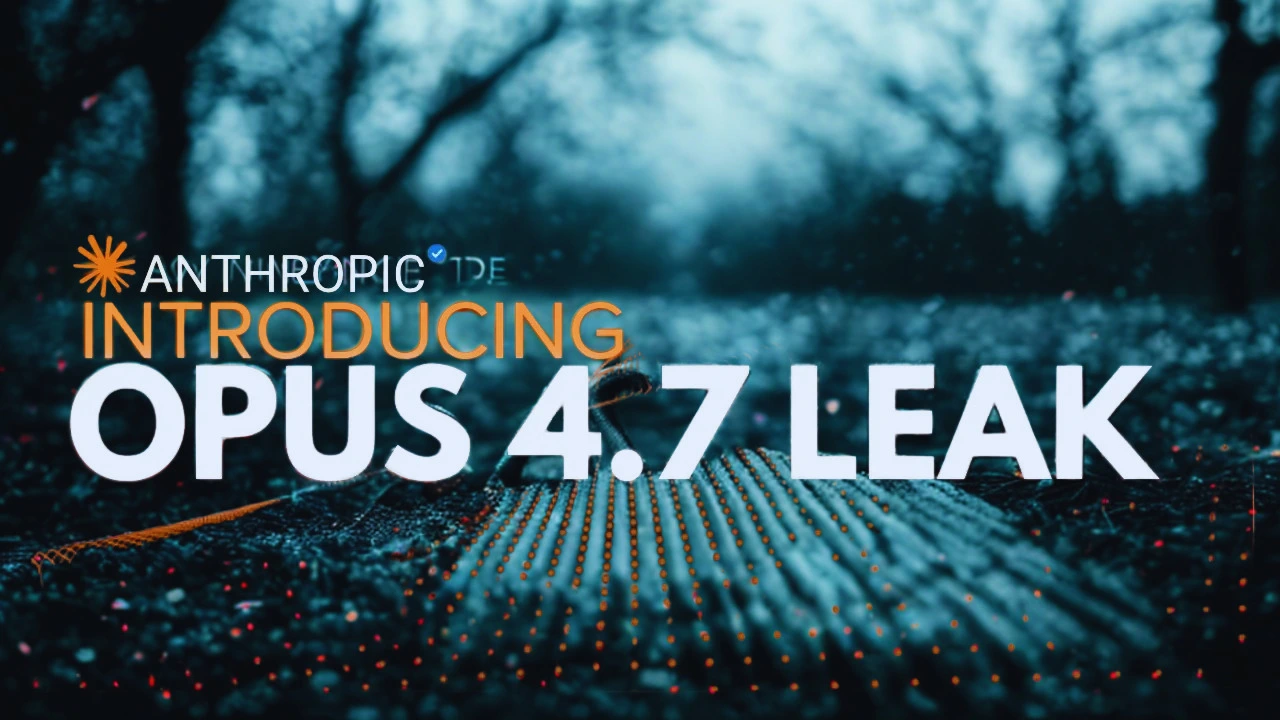
Anthropic didn’t make an announcement. They didn’t need to. The leaks did it for them. Claude Opus 4.7 is surfacing through internal API references and developer chatter — and what’s coming alongside it isn’t just a better model. It’s an entire ecosystem that should make OpenAI uncomfortable.
This isn’t just an upgrade. This is Anthropic making a move.
The Opus 4.7 signals started when developers noticed something odd — Claude Opus 4.6 performance appeared to be deliberately scaled back. That kind of intentional pullback has one explanation: a new model is coming and Anthropic is managing the transition. Internal API references have since confirmed what many suspected. Opus 4.7 is real, it’s close, and it’s built on a foundation that goes well beyond the model itself.
Here’s everything that’s coming with it.
Claude Opus 4.7 — The Model Itself
The predecessor Opus 4.6 was already competitive at the top of the benchmark charts. If Anthropic is deliberately throttling it in preparation for 4.7, the new model likely delivers a meaningful performance jump — not a marginal one. Developer excitement around internal API references suggests enhanced reasoning, better instruction following, and improved handling of complex multi-step tasks.
Full-Stack App Creation Platform
This is the one that should worry OpenAI the most. Anthropic is reportedly building a platform similar to Google AI Studio — a tool that lets developers create and deploy AI-powered applications through a streamlined, efficient workflow. Right now, building with Claude requires stitching together APIs, prompts, and infrastructure manually. A full-stack platform changes that entirely. It brings Anthropic into the developer tooling space in a serious way and lowers the barrier for building Claude-powered products dramatically.
Claude Code Update — Unified Multi-Project Management
Claude Code just got a significant update introducing a unified interface for managing multiple projects simultaneously. For developers handling complex repositories and parallel workflows, this is a genuine productivity upgrade. It makes Claude Code less of a single-session tool and more of a professional development environment. This positions Anthropic directly against GitHub Copilot and OpenAI’s Codex offerings — but with deeper contextual reasoning baked in.
Claude for Microsoft Word — Beta Is Live
Anthropic has started beta testing a Claude integration inside Microsoft Word. AI-powered drafting and editing directly inside the world’s most widely used word processor. No switching tabs, no copy-pasting into a chat interface. Just Claude, inside Word, helping you write. The implications for content creators, legal professionals, and enterprise users are massive.
Every major AI lab releases model updates. What makes this Anthropic moment different is the stack behind it. Opus 4.7 is not arriving alone — it’s arriving with a developer platform, a code tool upgrade, and a Microsoft Word integration simultaneously. Anthropic is building an ecosystem, not just a model. That is a strategic shift that changes how the competitive landscape looks.
While Anthropic is making moves, the rest of the industry isn’t sitting still — and the full picture matters.
OpenAI is developing a new GPT model expected to push performance and expand capabilities further. GPT Image Gen 2 is also on the way, promising significantly better visual outputs for creative and professional applications. And OpenAI just launched ChatGPT Pro at $100 per month — a subscription tier built specifically for heavy users and developers who need higher usage limits for intensive workloads.
Google I/O is generating serious anticipation. Insiders are speculating about Gemini 3.5, Gemini 4, and DeepSeek 4 announcements that could redefine natural language processing and AI-powered search. If even half of those rumors are accurate, Google I/O will be a watershed moment for the industry.
On the open source side, Miniax M2.7 has emerged as a strong performer for local setups — particularly in monitoring and reporting tasks. The catch is its non-commercial licensing, which limits it to research use and keeps it out of most production environments.
Gem Opus 426B, a fine-tuned version of the Gemma 426B model, is designed to replicate Claude Opus 4.6’s reasoning capabilities. It performs well on reasoning tasks but struggles with complex coding and debugging — making it a niche solution rather than a full replacement.
Buried beneath the excitement is a story that deserves more attention. Reports from India describe factory workers being equipped with head-mounted cameras to generate AI training data for industrial tasks. The practice has ignited debate around labor rights, privacy, and the human cost of AI development. As AI systems become more deeply embedded in industries worldwide, the question of who bears the burden of building them — and under what conditions — is becoming impossible to ignore. The industry needs ethical standards that match the pace of its technical progress.
Strengths
Weaknesses
Developers building AI-powered applications should watch the full-stack platform announcement closely. If Anthropic delivers a Google AI Studio equivalent with Claude’s reasoning quality, it becomes the most capable developer platform in the market.
Enterprise teams using Microsoft Word daily should get on the Claude for Word beta waitlist immediately. An AI drafting tool with Claude’s quality built natively into Word is not a minor convenience — it’s a workflow transformation.
Developers using Claude Code should explore the multi-project management update now. If your workflow involves multiple complex repositories, the unified interface upgrade directly impacts your daily productivity.
Competitive AI watchers should track this week carefully. With Anthropic, OpenAI, and Google all making moves simultaneously, the rankings at the frontier level may look different by the end of the month.
The consensus among AI observers is that Anthropic is executing a deliberate strategy — build the best reasoning model, then wrap it in tools that make it indispensable. The full-stack platform, Claude Code, and Word integration are not random product launches. They are a coordinated effort to embed Claude into developer and enterprise workflows so deeply that switching becomes painful.
OpenAI has the largest user base and the strongest brand recognition. Google has the infrastructure and the distribution. Anthropic’s bet is that reasoning quality and developer tooling quality will win the long game — especially in enterprise and professional markets where accuracy and reliability matter more than novelty.
That bet is looking smarter this week than it did last month.
Yes. But not because of Opus 4.7 alone.
OpenAI has faced model competition before and handled it well. What’s different this time is the ecosystem play. A full-stack app platform plus a major enterprise integration plus a developer tooling upgrade arriving together signals that Anthropic is no longer just competing on model benchmarks. They are competing for the infrastructure layer of AI development.
That is where the real long-term value lives — and Anthropic just showed they understand that.
The leaks only told part of the story. The full picture is more ambitious than anyone expected.
Bottom line — if you build with Claude, this week’s developments are worth tracking closely. If you compete with Anthropic, the full-stack platform announcement is the one to watch. The model upgrade is impressive. The ecosystem around it is the real story.