
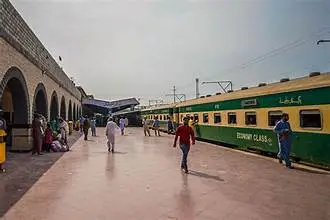
Pakistan Railways Increases Fares Following Fuel Price Hike
Pakistan Railways has announced an increase in train fares across passenger and freight services, effective Monday, March 9 — a direct fallout from the government’s historic Rs55 per litre hike in petroleum prices.
The New Fare Structure
According to Pakistan Railways Spokesperson Babar Ali, the revised fares break down as follows:
- Economy Class (Passenger): 5% increase
- AC Class (Passenger): 10% increase
- Freight/Goods Trains: 20% increase
Passengers who have already purchased advance tickets will not be required to pay the additional amount. The spokesperson confirmed that Pakistan Railways will absorb a portion of the increased operational costs for passenger trains to soften the blow for commuters.
“The increase in train fares was inevitable following the rise in diesel prices,” Babar Ali stated, describing the decision as unavoidable given the sharp jump in fuel expenditure.
Behind the Decision: Record Fuel Price Hike
The fare revision comes a day after the federal government announced Pakistan’s largest-ever fuel price increase — Rs55 per litre on both petrol and diesel. The announcement was made in a press conference by Petroleum Minister Ali Pervaiz Malik alongside Deputy Prime Minister Ishaq Dar and Finance Minister Muhammad Aurangzeb.
Under the revised fuel pricing:
- High-speed diesel rose from Rs280.86 to Rs335.86 per litre — a jump of roughly 20%
- Petrol climbed from Rs266.17 to Rs321.17 per litre — a rise of approximately 17%
Officials attributed the spike to Pakistan’s heavy reliance on oil shipments passing through the Strait of Hormuz, which has been disrupted by the escalating US-Israel conflict involving Iran. The government has described this as the first direct economic impact of the Gulf crisis to hit Pakistan domestically.
The Operational Cost Burden
Pakistan Railways consumes approximately 350,000 litres of diesel every day, making fuel one of its largest operational expenses. The Rs55-per-litre surge in diesel prices has added an estimated Rs19.25 million per day to the railways’ running costs — translating into an additional Rs577.5 million per month.
Despite the fare adjustment, the railway department has maintained it will still absorb part of the rising passenger service costs, a move interpreted as an effort to limit the financial impact on daily commuters, particularly those relying on more affordable economy-class travel.
Broader Impact on Transport
Pakistan Railways is not the only sector feeling the pressure. The government also raised jet fuel prices by Rs154 per litre — from Rs188.93 to Rs342.37 per litre — representing a staggering 82% increase. Airlines have warned that airfares could rise by as much as Rs5,000 as a result.
Public transport operators in cities like Lahore have already responded, with Speedo Bus and Orange Train services also announcing fare revisions following the fuel price hike.
Citizens have expressed concern over the compounding costs. Residents told The Express Tribune that salaries are already stretched thin while inflation continues to rise, with one commuter noting that the same amount of fuel that used to last weeks now barely lasts days.
What Happens Next
Pakistan is actively seeking alternative fuel supply arrangements. Petroleum Minister Ali Pervaiz Malik met with the Saudi Ambassador Nawaf bin Said Al-Malki to request oil supply through Saudi Arabia’s Red Sea port of Yanbu, with assurances reportedly secured. The government has also indicated that more fuel price adjustments may follow in the coming days as the global oil market continues to react to the Gulf conflict.
For now, train passengers can expect higher ticket prices at counters starting March 9 — with the economy class traveller facing the relatively modest 5% uptick, while AC-class commuters and the freight sector bear a heavier share of the adjustment.