
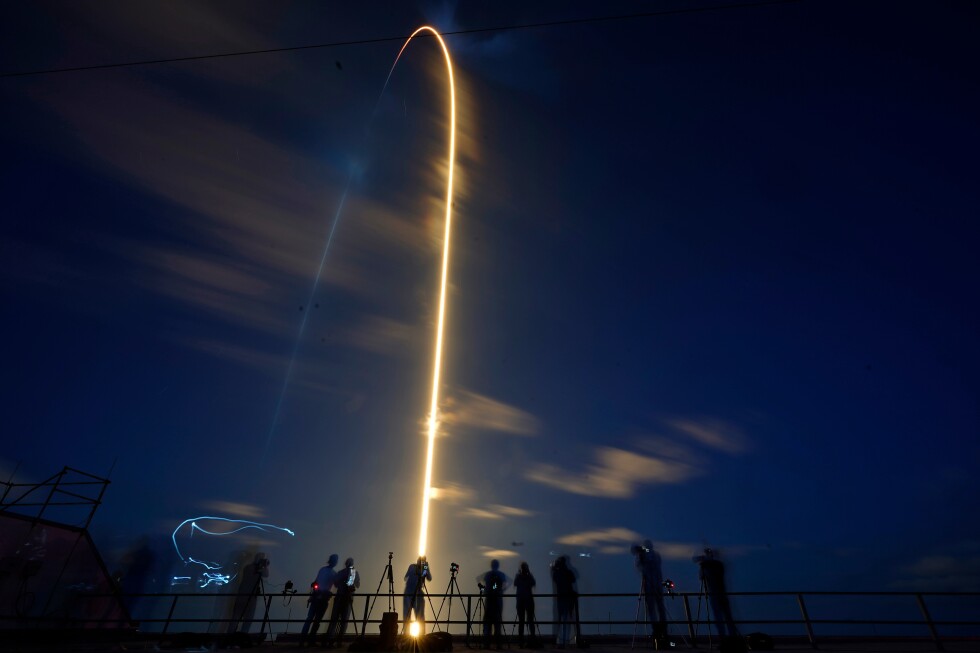
Pi in Cancer Research: From Rockets to Medical Breakthroughs
Pi Day Celebration: How Mathematical Constant Influences Modern Technology and Scientific Research
Pi Day, celebrated annually on March 14th, brings together mathematics enthusiasts and dessert lovers worldwide to honor the famous mathematical constant π (pi). This celebration highlights how pi influences everything from Technology development to cancer research applications across the globe.
⚡ Quick Summary
- Pi Day started in 1988 at San Francisco’s Exploratorium museum
- Mathematical constant pi equals approximately 3.14159 with infinite decimal places
- Pi applications span rocket science, cancer research, and modern technology
- Global celebration occurs March 14th at 1:59 PM representing pi’s first digits
What is Pi and Why Does it Matter?
Pi is defined as the mathematical constant representing the ratio between any circle’s circumference and its diameter. This fundamental number equals approximately 3.14159, though its decimal places continue infinitely without repeating patterns. Unlike simple fractions, pi remains an irrational number that has fascinated mathematicians for over 4,000 years.
Origins and History of Pi Day Celebration
Larry Shaw, a physicist at San Francisco’s Exploratorium science museum, created Pi Day in 1988. Shaw envisioned this celebration as an opportunity to demonstrate the joy of learning mathematics to general audiences. According to Sam Sharkland, the museum’s current director of public programs who worked alongside Shaw before his death in 2017, the physicist maintained “a very open and broad worldview.”
The celebration began as a modest staff gathering featuring pie, but quickly evolved into a massive public event. Today, hundreds of visitors participate in annual processions around the museum’s pi shrine, with each participant carrying individual digits of the famous constant.
Modern Applications of Pi in Technology and Science
Rocket Science and Space Exploration
NASA and other space agencies rely heavily on pi calculations for spacecraft trajectory planning. Engineers use pi-based formulas to calculate orbital mechanics, fuel consumption rates, and landing coordinates for missions to Mars and beyond.
Cancer Research Applications
Medical researchers utilize pi in statistical models analyzing cancer cell growth patterns. Oncologists apply circular geometry principles involving pi to calculate tumor volumes and radiation therapy dosages, directly impacting patient treatment outcomes.
GPS and Navigation Technology
Modern GPS systems embedded in smartphones and vehicles depend on pi calculations for accurate positioning. Satellite communication algorithms use circular trigonometric functions based on pi to determine precise locations within meters.
Global Pi Day Traditions and Celebrations
Pi Day celebrations have spread internationally, with educational institutions and technology companies hosting special events. Many participants arrive early at celebrations to claim their favorite digits for parade participation. One dedicated enthusiast with a pi symbol neck tattoo attends San Francisco’s celebration annually, marching at the front with a pi flag.
| Pi Application | Industry Impact |
|---|---|
| Satellite Navigation | GPS accuracy within 3-5 meters globally |
| Medical Imaging | CT scan and MRI circle reconstruction |
| Engineering Design | Circular component manufacturing |
| Quantum Physics | Wave function calculations |
Educational Impact and STEM Learning
Pi Day serves as a gateway for introducing complex mathematical concepts to students worldwide. Education systems across Pakistan and internationally use this celebration to make mathematics more engaging and accessible.
Teachers report increased student interest in geometry and advanced mathematics following Pi Day activities. The combination of hands-on learning with real-world applications helps students understand mathematics’ practical relevance in daily life.
Pi in Pakistani Technology and Research
Pakistani universities and research institutions increasingly recognize pi’s importance in modern technology development. Local engineering programs emphasize pi applications in telecommunications, automotive design, and emerging Automobiles technology sectors.
Frequently Asked Questions About Pi Day
When is Pi Day celebrated worldwide?
Pi Day occurs annually on March 14th (3/14), representing the mathematical constant’s first three digits. Official celebrations typically begin at 1:59 PM, incorporating additional pi digits.
Who created Pi Day and when?
Larry Shaw, a physicist at San Francisco’s Exploratorium museum, established Pi Day in 1988. The celebration started as a small staff event but grew into an international phenomenon.
How is pi used in modern technology?
Pi appears in GPS navigation systems, medical imaging equipment, satellite communications, computer graphics, and quantum computing applications essential for modern life.
Why does pi have infinite decimal places?
Pi is an irrational number, meaning its decimal representation never terminates or repeats in patterns. Mathematicians have calculated pi to over 31 trillion decimal places using advanced computing.
What careers require knowledge of pi?
Engineers, physicists, computer scientists, medical researchers, architects, and statisticians regularly use pi in professional applications across diverse industries.
📚 Related Articles You May Like
Conclusion and Call to Action
Pi Day represents more than mathematical celebration—it demonstrates how fundamental constants shape our technological world. From rocket launches to cancer treatment, pi remains essential for scientific advancement and innovation.
As Pakistan continues developing its technology sector and research capabilities, understanding mathematical concepts like pi becomes increasingly important for students and professionals alike. This United States News highlights how global scientific celebrations can inspire local educational initiatives.
Consider participating in Pi Day activities to explore mathematics’ practical applications and inspire the next generation of Pakistani scientists and engineers. Source: AP News US