
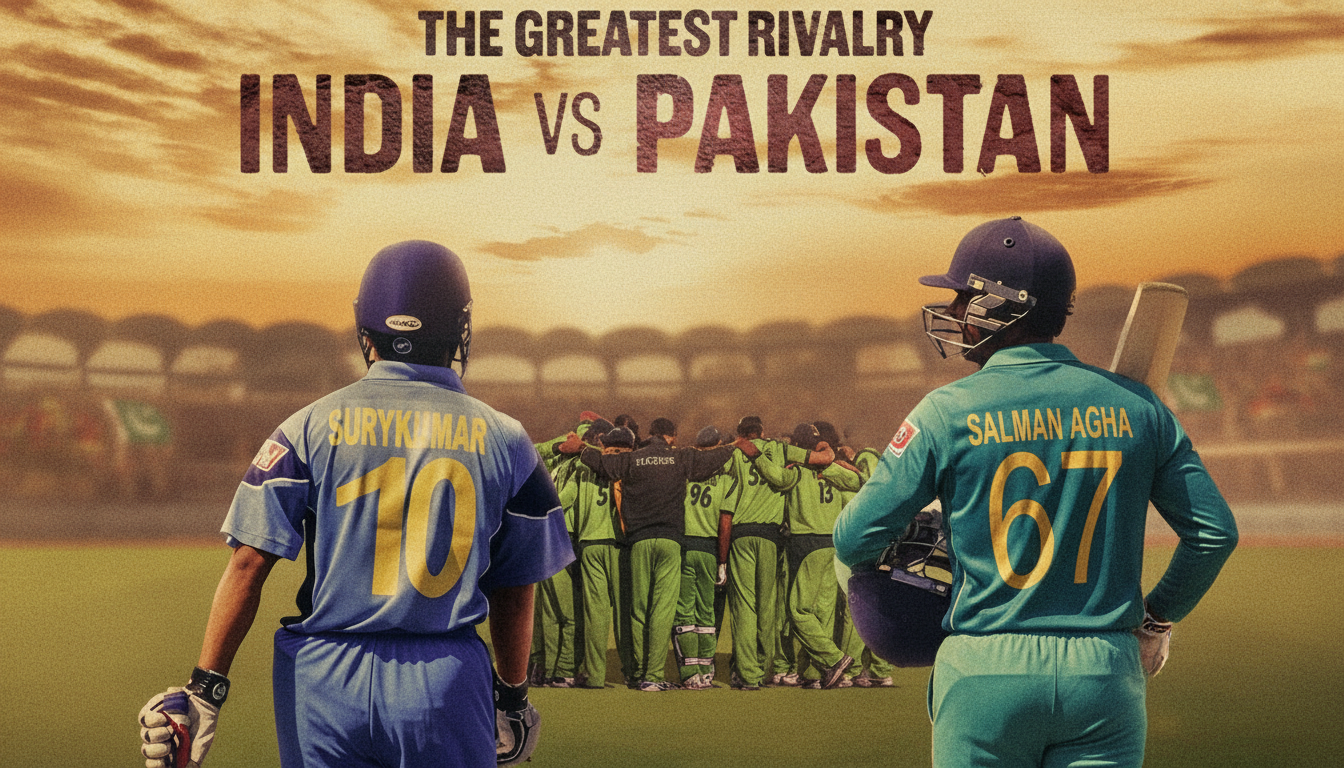
PAK vs IND Cricket Biggest Rivalry Returns with Unprecedented Controversy | T20 World Cup 2026
India vs Pakistan T20 World Cup 2026: The Most Anticipated Match Faces Boycott Crisis
The India vs Pakistan clash, cricket’s most electrifying rivalry, faces an unprecedented crisis at the ICC T20 World Cup 2026. Scheduled for February 15, 2026 at the iconic R Premadasa Stadium in Colombo, this blockbuster encounter has been thrown into uncertainty after Pakistan announced a controversial boycott decision that has sent shockwaves through the cricketing world.
This Group A match between the arch-rivals was expected to be the tournament’s biggest spectacle, worth hundreds of millions of dollars in broadcast, sponsorship, and advertising revenue. However, political tensions and solidarity with Bangladesh have created cricket’s biggest diplomatic crisis in recent memory.
India vs Pakistan T20 World Cup 2026 – Match Details
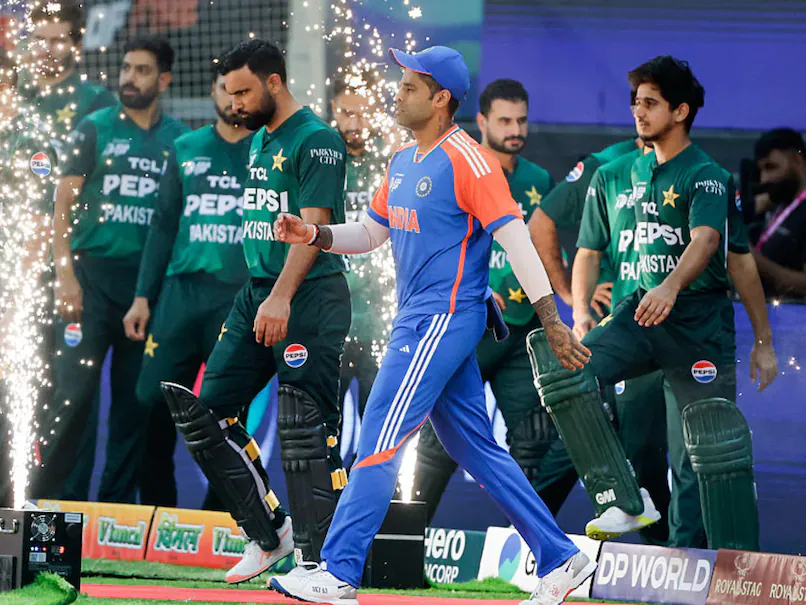
Tournament: ICC T20 World Cup 2026
Match: 27th Match, Group A
Scheduled Date: Saturday, February 15, 2026
Match Time: 7:00 PM Local Time (7:00 PM IST, 1:30 PM GMT)
Venue: R Premadasa Stadium, Colombo, Sri Lanka
Match Type: T20 International, World Cup Group Stage
Group: Group A (India, Pakistan, Namibia, Netherlands, USA)
Current Status: Under Dispute – Pakistan Announced Boycott
The Boycott Announcement – Pakistan’s Historic Decision
Pakistan Government’s Official Statement
On February 1, 2026, the Government of Pakistan issued a historic statement that shocked the cricket world:
“The Government of the Islamic Republic of Pakistan grants approval to the Pakistan Cricket Team to participate in the ICC World T20 2026, however, the Pakistan Cricket Team shall not take the field in the match scheduled on 15th February 2026 against India.”
This unprecedented announcement marked the first time any nation has declared a selective boycott of a single match while participating in the rest of an ICC World Cup tournament. The decision specifically targets the India vs Pakistan Group A clash scheduled in Colombo.
Prime Minister Shehbaz Sharif’s Clarification
Pakistani Prime Minister Shehbaz Sharif later clarified the reason behind this controversial boycott in a televised address to his cabinet on February 5, 2026:
“We have taken a very clear stand on the T20 World Cup that we won’t play the match against India because there should be no politics on the sports field. We have taken a very considered stance, and we should completely stand by Bangladesh, and I think this is a very appropriate decision.”
This statement confirmed that Pakistan’s boycott is a show of solidarity with Bangladesh, who were removed from the T20 World Cup 2026 after refusing to travel to India citing security concerns.
The Bangladesh Crisis – Root Cause of the Boycott
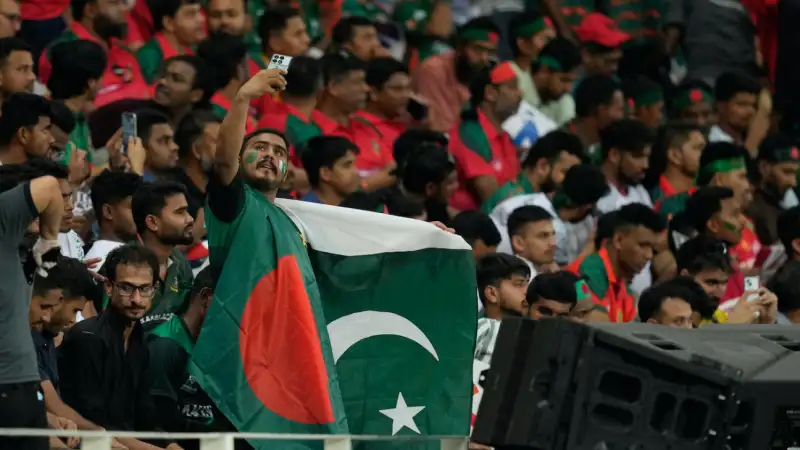
Why Bangladesh Was Excluded from T20 World Cup 2026
The crisis began when Bangladesh refused to travel to India for their group stage matches at the T20 World Cup 2026, citing security concerns. The Bangladesh government demanded that their team’s matches be moved from India to Sri Lanka, the co-host nation.
On January 24, 2026, the International Cricket Council (ICC) held a board meeting where members voted 14-2 in favor of replacing Bangladesh with Scotland rather than accommodating their request to play in Sri Lanka. The only two votes against this decision came from the Pakistan Cricket Board (PCB) and the Bangladesh Cricket Board (BCB).
PCB Chairman Mohsin Naqvi’s Strong Reaction
Mohsin Naqvi, who serves as both PCB Chairman and Pakistan’s Interior Minister, strongly criticized the ICC’s decision, calling it “double standards” and an “injustice” to Bangladesh.
“You can’t have double standards. You can’t say for one country [India] they can do whatever they want and for the others to have to do the complete opposite. That’s why we’ve taken this stand and made clear Bangladesh have had an injustice done to them,” Naqvi stated.
Naqvi referenced the Hybrid Model that allows India to avoid playing in Pakistan during ICC tournaments, questioning why the same accommodation wasn’t extended to Bangladesh.
The Mustafizur Rahman Incident
The tensions escalated when, on January 3, 2026, the Board of Control for Cricket in India (BCCI) removed Bangladeshi fast bowler Mustafizur Rahman from the Indian Premier League (IPL) due to political tensions between India and Bangladesh. This decision further deteriorated relations and contributed to Bangladesh’s security concerns about traveling to India.
ICC’s Response and Potential Sanctions
ICC’s Official Statement and Warnings
The International Cricket Council (ICC) responded firmly to Pakistan’s boycott announcement, warning of “significant and long-term implications for cricket in Pakistan” and an impact on the global cricket ecosystem.
The ICC emphasized that it expected the PCB to “explore a mutually acceptable resolution, which protects the interests of all stakeholders.”
Potential Consequences for Pakistan Cricket Team
If Pakistan proceeds with the boycott, they face several serious consequences:
Immediate Impact:
- Forfeit 2 Points in Group A standings (India gains 2 points without playing)
- Severe Net Run Rate Damage – treated as a heavy loss
- Reduced Qualification Chances from Group A
Financial Penalties:
- ICC could claim material damages worth hundreds of millions of dollars
- Loss of revenue share from the tournament
- Potential fine for non-compliance with Members Participation Agreement
Legal and Long-term Sanctions:
- Possible suspension from future ICC events
- Hosting rights for future tournaments could be revoked
- Reputation damage in international cricket community
Force Majeure Clause Rejection
The PCB reportedly invoked the ‘force majeure’ clause in its communication to the ICC, citing government directives as the reason for the boycott. However, the ICC rejected this claim outright, demanding detailed justification and proof of mitigation efforts, emphasizing that selective non-participation doesn’t qualify under the Members Participation Agreement.
Back-Channel Negotiations and Diplomatic Efforts
ICC-PCB Talks to Resolve the Crisis
Since the boycott announcement, intense back-channel negotiations have been ongoing between the ICC and PCB to find a resolution that allows the India vs Pakistan match to proceed as scheduled on February 15, 2026.
ICC Deputy Chairman Imran Khwaja, based in Singapore, has been in regular contact with Mohsin Naqvi to address the PCB’s grievances and explore possible solutions.
Bangladesh Cricket Board’s Involvement
Aminul Islam Bulbul, chairman of the Bangladesh Cricket Board, traveled to Lahore, Pakistan for discussions with PCB officials on February 8, 2026. His presence is part of Pakistan’s continuing show of solidarity with Bangladesh, and he’s expected to participate in meetings with ICC officials to thrash out a solution.
Sri Lanka Cricket’s Appeal
Sri Lanka Cricket (SLC) has also appealed to the PCB to revoke the boycott, primarily due to the massive financial ramifications. The India vs Pakistan match at R Premadasa Stadium would have been the biggest revenue generator for Sri Lankan cricket, and a boycott would result in:
- Loss of ticket sales (estimated at millions of dollars)
- Tourism impact on Sri Lanka’s recovering economy
- Venue revenue and hospitality income
PCB’s Three Reported Conditions
According to recent reports, Mohsin Naqvi has reportedly placed three key demands before the ICC to reconsider the boycott, though these have not been officially confirmed by the PCB. The PCB has publicly denied approaching the ICC for dialogue, with spokesperson Amir Mir categorically rejecting such claims.
However, sources suggest negotiations are ongoing, and the PCB’s stance may have softened after learning the scale of potential financial damages and sanctions.
India Response to the Boycott
Captain Suryakumar Yadav’s Statement
India captain Suryakumar Yadav confirmed that the Indian team remains ready to travel to Colombo for the scheduled match on February 15, 2026, regardless of Pakistan’s decision.
“We have our plans to fly to Colombo. The refusal to play came from Pakistan, not us. We’ll be there,” Yadav stated confidently.
India’s Strong Position in Group A
India has already begun their T20 World Cup 2026 campaign on a positive note, securing a commanding victory over USA in their opening match. The team looks in excellent form with:
Key Players in Form:
- Ishan Kishan – explosive opening batsman who scored 53 off 20 balls in the warm-up match against South Africa
- Suryakumar Yadav – captain and middle-order maestro returning to form
- Hardik Pandya – all-rounder providing balance
- Strong bowling attack led by Jasprit Bumrah
Expert Opinions from India
Legendary Indian commentator Sunil Gavaskar criticized Pakistan’s decision, noting that India has historically extended gestures to Pakistan that are rarely reciprocated. Many Indian cricket experts view the boycott as politically motivated and damaging to the sport.
Pakistan’s T20 World Cup 2026 Campaign So Far
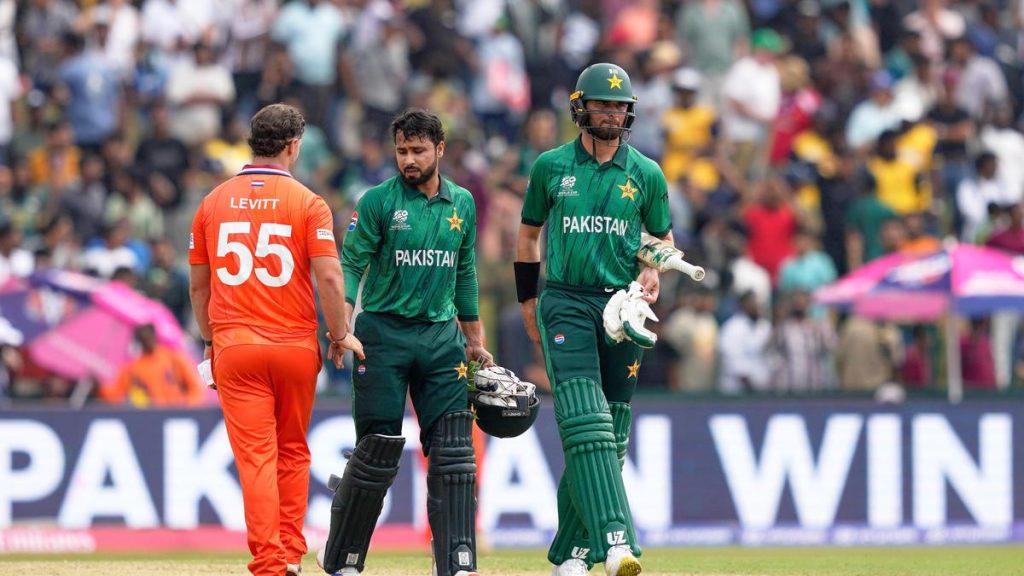
Victory Over Netherlands in Tournament Opener
Despite the boycott controversy, Pakistan began their T20 World Cup 2026 campaign with a convincing victory over Netherlands on February 7, 2026 at the Sinhalese Sports Club Ground in Colombo.
Pakistan’s strong performance against the Netherlands showed they are in good form heading into the tournament, making their potential boycott of the India match even more controversial from a cricketing perspective.
Pakistan’s Group A Fixtures
Pakistan’s T20 World Cup 2026 Schedule (All in Sri Lanka):
Match 1: Pakistan vs Netherlands – February 7, 2026 (Completed – Pakistan Won)
Match 2: Pakistan vs USA – February 10, 2026
Match 3: Pakistan vs India – February 15, 2026 (BOYCOTT ANNOUNCED)
Match 4: Pakistan vs Namibia – February 18, 2026
If Pakistan forfeits the India match, they will need to win all their remaining group matches to ensure qualification from Group A, as the 2-point deduction and net run rate damage could prove costly.
Captain Salman Agha’s Position
Pakistan captain Salman Agha has stated that if Pakistan were to face India in a semi-final or final, the team would be willing to play. This statement has added confusion to the situation, as it suggests the boycott is limited to the group stage match and not based on absolute security or political concerns.
Agha also mentioned that Sri Lanka “is like a second home” for Pakistani cricketers, praising the support and love the team receives there, which makes the boycott even more puzzling from a player’s perspective.
Historical Context – India vs Pakistan Rivalry
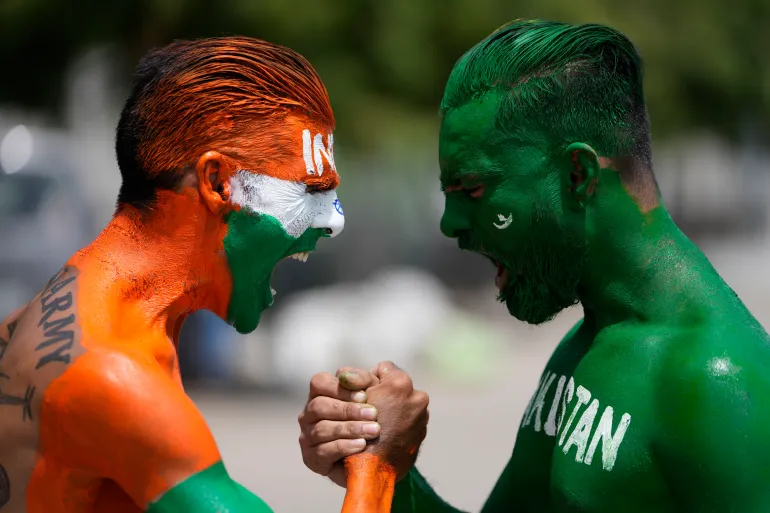
The Greatest Rivalry in Cricket
The India vs Pakistan cricket rivalry is widely regarded as the most intense and watched sporting rivalry in the world. The two nations share a complex political history dating back to the partition of 1947, which has made their cricket encounters much more than just sporting events.
T20 World Cup History Between India and Pakistan
Previous T20 World Cup Encounters:
- 2007 T20 World Cup Final: India defeated Pakistan by 5 runs (Johannesburg)
- 2012 T20 World Cup: India won (Super Eights, Colombo)
- 2014 T20 World Cup: India won by 7 wickets (Mirpur)
- 2016 T20 World Cup: India won (Kolkata)
- 2021 T20 World Cup: Pakistan won by 10 wickets (Dubai) – Pakistan’s first World Cup win over India
- 2022 T20 World Cup: India won by 4 wickets (Melbourne)
Overall T20 World Cup Record:
India leads 5-1 in T20 World Cup matches against Pakistan
The 2021 Record-Breaking Viewership
In 2021, the India-Pakistan match at the T20 World Cup registered a record 167 million viewers, making it the most-watched T20 international in history. This astronomical viewership makes it the most valuable advertising window of any World Cup, worth hundreds of millions of dollars.
No Bilateral Cricket Since 2012
India and Pakistan have not played bilateral cricket (outside ICC tournaments) since 2012-13 due to political tensions. Under the current arrangement, the two nations only meet in ICC tournaments and Asia Cup events.
Following the 2019 Pulwama attack, the BCCI has consistently refused to play bilateral series with Pakistan. Similarly, a Hybrid Model has been adopted for ICC events where India hosts – Pakistan plays at neutral venues rather than traveling to India
Financial Impact of the Potential Boycott
Broadcasting and Sponsorship Revenue Loss
The India vs Pakistan match is the golden goose of cricket broadcasting. If the boycott proceeds, the financial losses would be staggering:
Estimated Revenue Impact:
- Broadcasting Rights: Loss of $200-300 million in ad revenue
- Sponsorship Deals: Major brands banking on India-Pakistan visibility face losses
- Ticket Sales: R Premadasa Stadium loses millions from sold-out stadium revenue
- Tourism: Sri Lanka’s hospitality sector loses peak business opportunity
- Merchandise Sales: Massive loss in fan merchandise and memorabilia
Impact on Pakistan Cricket’s Finances
Pakistan would face its own severe financial consequences:
- ICC Revenue Share: Reduction in annual ICC distribution
- Sanctions and Fines: Potential legal damages worth millions
- Future Sponsorships: Damaged reputation affecting commercial deals
- Broadcasting Rights: PCB’s own TV rights value could depreciate
What Happens Next? – Possible Scenarios
Scenario 1: Pakistan Reverses the Boycott (Most Likely)
Given the ongoing negotiations and the massive financial and cricketing implications, sources suggest Pakistan may reverse its boycott decision before February 15, 2026. This would require:
- Face-saving solution from ICC addressing Pakistan’s concerns about Bangladesh
- Government approval from Pakistan to change the decision
- Public statement framing it as achieving the desired outcome
Probability: 60-70% (based on current back-channel talks)
Scenario 2: Match Goes Ahead Without Pakistan (Forfeit)
If Pakistan maintains its boycott stance:
- India awarded 2 points without playing
- Pakistan’s net run rate heavily damaged
- Historic first forfeit in India-Pakistan World Cup history
- Massive financial and reputational damage to Pakistan cricket
Probability: 20-30%
Scenario 3: ICC Finds Alternative Solution
The ICC could potentially:
- Schedule a replacement match at a later date
- Move the fixture to a different venue
- Allow hybrid model participation
- Issue compromise statement on Bangladesh situation
Probability: 10-15%
Scenario 4: Tournament Restructuring
In an extreme scenario, the ICC could:
- Reschedule group stage fixtures
- Change tournament format
- Remove Pakistan entirely from the tournament
Probability: Less than 5% (highly unlikely)
Expert Analysis and Opinions
Cricket Analysts’ Perspectives
Financial Expert View:
“This boycott could cost world cricket hundreds of millions of dollars. The India-Pakistan match is the Super Bowl of cricket. No other fixture comes close to its global appeal and revenue generation,” noted a senior cricket business analyst.
Political Commentator View:
“Pakistan’s decision represents regional influence and a retaliatory move. Their boycott seems designed to hit where it hurts most – the finances and prestige of the tournament,” explained Dr. Dure Shahwar Bano, political science lecturer at Kinnaird College for Women in Lahore.
Cricket Diplomacy Expert View:
“This decision has a direct connection with Bangladesh’s venue change request which was refused by ICC. Pakistan and Bangladesh voted together, creating a united front against what they perceive as ICC’s favoritism toward India,” said Mathew John Moolakkattu, researcher at Amrita Vishwa Vidyapeetham University.
Former Players’ Reactions
Former cricketers from around the world have expressed dismay at the political interference in cricket. Many believe that the sport should remain above politics, while others acknowledge the complex geopolitical realities that Pakistan and Bangladesh face.
Public Opinion – Fans Divided
Pakistani Cricket Fans’ Reactions
Pakistani fans are divided on the boycott decision:
Support for Boycott:
- Show solidarity with Bangladesh
- Stand against perceived ICC double standards
- Protest India’s influence in world cricket
- Support government’s principled stance
Against Boycott:
- Want to see Pakistan play and defeat India on the field
- Concerned about cricketing consequences (points loss, sanctions)
- Believe politics shouldn’t interfere with sport
- Worried about Pakistan’s World Cup chances
Indian Cricket Fans’ Reactions
Indian fans largely view the boycott as:
- Pakistan’s loss, India’s gain (free 2 points)
- Political posturing rather than genuine concern
- Disappointment at missing cricket’s greatest rivalry
- Criticism of PCB’s handling of the situation
Neutral Cricket Fans’ Perspective
Cricket fans worldwide are disappointed that politics has overshadowed the sport. The India vs Pakistan match is a global event that transcends boundaries, and its potential cancellation is seen as a loss for cricket itself.
The Bigger Picture – Cricket and Politics
ICC’s Balancing Act
The International Cricket Council faces a difficult balancing act:
- Maintaining tournament integrity
- Enforcing rules fairly across all member nations
- Managing political sensitivities
- Protecting cricket’s commercial interests
- Setting precedents for future situations
The Bangladesh Parallel
The situation raises important questions:
- Should countries be forced to travel where they have security concerns?
- Is the Hybrid Model only available to powerful cricket boards?
- Can ICC maintain neutrality amid geopolitical tensions?
- What precedent does this set for future tournaments?
Future of India-Pakistan Cricket
This crisis could have long-lasting implications:
- ICC Events: Future India-Pakistan matches may face similar issues
- Bilateral Series: Already frozen, now even more distant
- Champions Trophy 2025: The hybrid model precedent was set here
- Global Cricket: Political interference increasing
Key Dates and Timeline to Watch
February 7, 2026: Pakistan plays Netherlands (Completed – Pakistan Won)
February 8, 2026: India plays USA (Completed – India Won)
February 8, 2026: BCB Chairman arrives in Lahore for discussions with PCB
February 9-14, 2026: Intensive ICC-PCB negotiations expected
February 10, 2026: Pakistan vs USA match
February 15, 2026: SCHEDULED India vs Pakistan match – 7:00 PM at R Premadasa Stadium, Colombo
February 18, 2026: Pakistan vs Namibia match
The next few days will be crucial in determining whether cricket’s greatest rivalry will take place or if history will witness the first-ever India vs Pakistan World Cup forfeit.
Conclusion – Cricket’s Biggest Rivalry at Crossroads
The India vs Pakistan T20 World Cup 2026 match stands at a historic crossroads. What should have been a celebration of cricket’s most electrifying rivalry has instead become a complex political and diplomatic crisis that threatens to overshadow the entire tournament.
Pakistan’s boycott decision, taken in solidarity with Bangladesh, has created unprecedented uncertainty. While the move has principled motivations from Pakistan’s perspective, the cricketing and financial consequences are severe.
As back-channel negotiations continue, the cricket world holds its breath, hoping that common sense and love for the game will prevail. The February 15, 2026 date looms large – will we witness cricket’s greatest rivalry renewed, or will we see the first-ever World Cup forfeit between these arch-rivals?
One thing is certain: the India vs Pakistan rivalry transcends cricket. It’s about pride, passion, politics, and billions of fans worldwide who deserve to see their heroes battle it out on the field, not in boardrooms and government offices.As developments continue to unfold, cricket fans can only hope that diplomacy succeeds, and the R Premadasa Stadium in Colombo witnesses the spectacle it was meant to host – the clash of titans, the battle of giants, the India vs Pakistan match that the world is waiting for.